
After years of testing, I’ve found that the secret to the most magnificent German Goulash isn’t a fancy spice or a modern gadget, but the humble onion and the gift of time.
I have spent decades at my stove, stirring heavy iron pots, and I can tell you with absolute certainty that this slow-simmered method is the only way to achieve that rich, velvet-like sauce.
You don’t need to be a professional chef to master this; you simply need a little patience and a love for deep, soulful flavors that warm you from the inside out.
Once you taste this version, with its tender beef and sweet, smoky undertones, you will never look at a store-bought stew the same way again.
It is a dish that tells a story of tradition, and I am so delighted to share my kitchen secrets with you today.
What Makes This Special
- The 1:1 Onion Ratio: Using an equal weight of onions to beef is what creates the naturally thick, sweet gravy without needing excessive flour.
- The Power of Paprika: We use a combination of sweet and smoked paprika to provide a complex depth that hits every part of your palate.
- Low and Slow Heat: Gently simmering the meat allows the connective tissues to melt into gelatin, resulting in beef that falls apart at the touch of a fork.
The Essentials
In my kitchen, I always say that a dish is only as good as the ingredients you invite into your pot.
For a true German Goulash, we aren’t looking for expensive cuts of meat, but rather the ones that have worked hard and carry the most flavor.
Gather these simple staples, and let’s prepare a meal that your family will remember for years to come.
- Beef Chuck Roast: (Choose a well-marbled cut because the fat will render down to keep the meat incredibly moist during the long cook).
- Yellow Onions: (We use a large amount because they break down completely to form the base of our thick, savory sauce).
- Beef Broth: (Always use a high-quality broth to provide a deep, salty foundation for the other spices to dance upon).
- Tomato Paste: (This adds a concentrated richness and a touch of acidity to balance the sweetness of the caramelized onions).
- Sweet German Paprika: (This is the star of the show, providing that signature red color and a mild, earthy sweetness).
- Smoked Paprika: (Just a touch gives the stew a hint of “cooked over a campfire” soul that is simply irresistible).
- Caraway Seeds: (Crucial for digestion and that authentic German flavor profile that distinguishes it from other stews).
- Red Wine: (A dry red like Pinot Noir or Merlot helps deglaze the pan and adds a sophisticated layer of fruitiness).
- Garlic: (Freshly minced garlic provides a sharp aromatic kick that mellows out beautifully as it simmers).
- Bay Leaves: (These subtle leaves add a floral, herbal note that ties all the heavy beef flavors together).
- Lard or Oil: (Traditionalists use lard for a richer mouthfeel, but a high-smoke point oil works perfectly well for searing).
Simple Swaps
If your pantry is looking a little bare, don’t you worry one bit; we can always make it work.
- The Meat: If you can’t find chuck, pork shoulder or even venison make wonderful hearty alternatives.
- The Wine: You can easily replace the red wine with an extra splash of beef broth and a teaspoon of balsamic vinegar for acidity.
- The Spices: If caraway seeds aren’t to your liking, a pinch of dried marjoram or thyme offers a different but lovely herbal note.
- The Liquid: For a deeper, darker flavor, try using a dark German beer instead of red wine and broth.
- The Onions: If you don’t have yellow onions, red onions will provide a slightly sweeter and more colorful result.
Ways to Change It Up
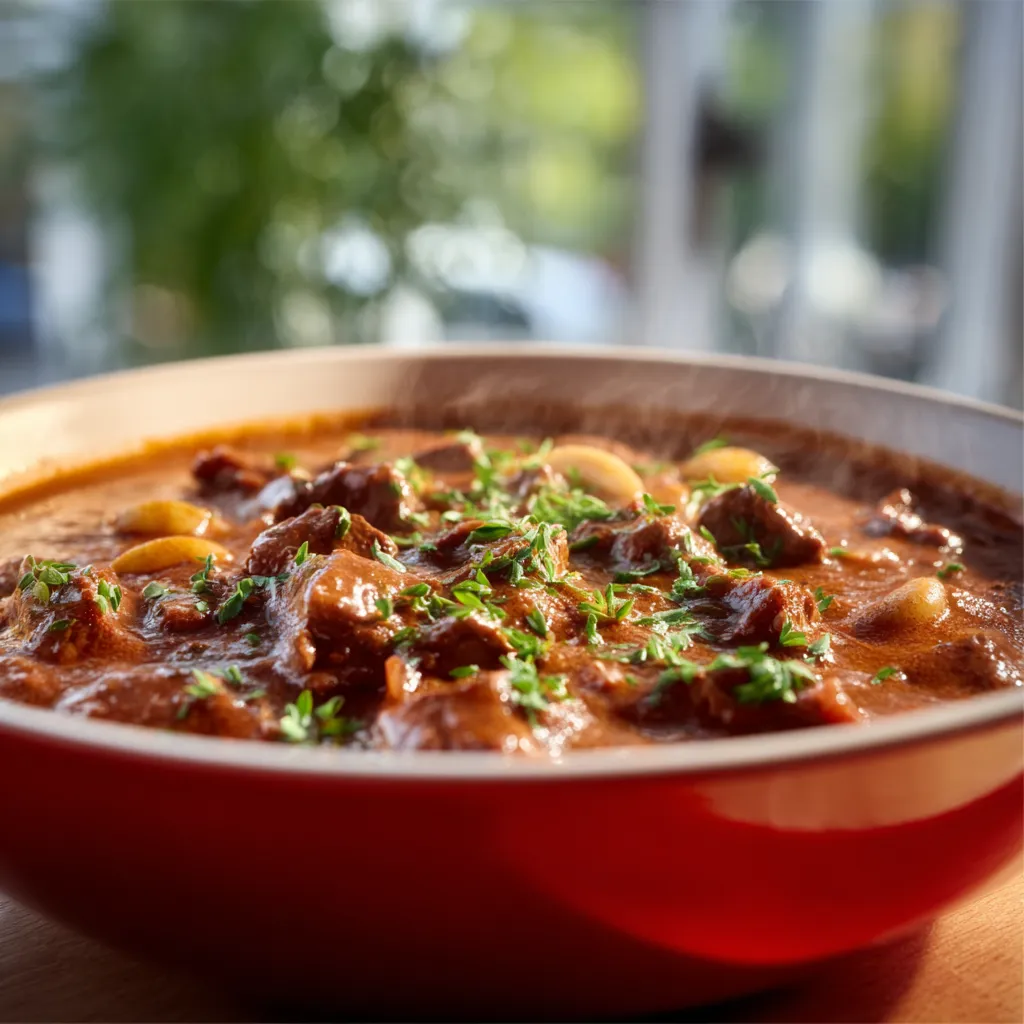
While I believe the classic version is hard to beat, there is always room for a little kitchen creativity.
One of my favorite variations is adding diced red bell peppers during the last hour of cooking to add a pop of color and freshness.
If you prefer a creamier finish, you can stir in a dollop of sour cream or heavy cream right before serving, similar to how one might enjoy a Polish Potato Soup.
For those who love a bit of heat, adding a pinch of cayenne pepper or a sliced spicy pepper will give the stew a lively kick that wakes up the senses.
I’ve also seen dear friends add small cubes of potatoes directly into the pot, much like the technique used in Slow Cooker Garlic Butter Beef Bites With Potatoes, making it a true one-pot wonder.
The Process
Now, put on your favorite apron and let’s begin the rhythmic work of building these layers of flavor.
Step 1: Preparing the Beef
Cut your beef into uniform 1.5-inch cubes, making sure to remove any excessively large pieces of tough gristle.Pat the meat dry with paper towels; this is a vital step because moisture is the enemy of a good sear.
Step 2: The Golden Sear
Heat your lard or oil in a heavy-bottomed Dutch oven over medium-high heat until it shimmers.Brown the beef in small batches, giving each piece enough room to breathe so they brown rather than steam.
Once browned on all sides, remove the meat to a plate and resist the urge to snack on those crispy bits!
Step 3: The Onion Base
In the same pot, add your mountain of sliced onions, using the moisture from the onions to scrape up the brown bits (the fond) from the bottom.Turn the heat down to medium and cook the onions for at least 15 to 20 minutes until they are soft and a deep golden brown.
This is where the magic happens, so do not rush this process; the onions are your sauce’s soul.
Step 4: Aromatics and Spices
Stir in the tomato paste and minced garlic, cooking for just a minute until the paste turns a shade darker and smells fragrant.Add the paprika and caraway seeds, stirring constantly for thirty seconds to “wake up” the oils in the spices without burning them.
Step 5: The Deglaze
Pour in your red wine, using a wooden spoon to ensure every bit of flavor is lifted from the bottom of the pot.Let the wine reduce by half, which concentrates the flavor and removes the harshness of the alcohol.
Step 6: The Long Simmer
Return the beef and its accumulated juices to the pot and pour in the beef broth and bay leaves.Bring the liquid to a very gentle boil, then immediately reduce the heat to the lowest setting.
Cover the pot tightly and let it whisper away on the stove for 2 to 3 hours, or until the beef is meltingly tender.
Step 7: The Final Touch
Taste your masterpiece and add salt and pepper as needed; you’ll find the flavors have intensified significantly.If the sauce is too thin for your liking, simmer it uncovered for the last 20 minutes to allow it to reduce and thicken naturally.
Tips for Best Results
Complete the Table
A stew this magnificent deserves companions that can stand up to its bold personality.
Traditionally, we serve this over buttered Spätzle, those lovely little German egg noodles that soak up the sauce like a dream.
If you aren’t in the mood for noodles, a pile of creamy mashed potatoes or even some crispy Hungarian Potato Pancakes would be absolutely divine.
To cut through the richness of the beef, I always suggest a side of tart red cabbage or a quick Sausage And Cabbage Stir Fry if you happen to have leftovers in the fridge.
And of course, no German feast is complete without a thick slice of rye bread to mop up every last drop of that precious red gravy.
If you are hosting a festive dinner, you might even consider a Crockpot Pierogi Casserole With Kielbasa as an additional side for a very hungry crowd.
Finally, cleanse the palate with a slice of Bee Sting Cake Bienenstich for a dessert that provides the perfect sweet ending to your rustic meal.
Thanks for stopping by! I hope this dish brings joy to your table.
What is the secret to achieving a thick, velvet-like sauce in German Goulash?
The secret is using a 1:1 onion-to-beef ratio. By using an equal weight of onions and beef, the onions break down completely during the long simmering process to create a naturally thick, sweet gravy without needing excessive flour.
What should I do if the beef is still tough after several hours of cooking?
If the meat feels tough, it simply hasn’t cooked long enough. You should give it another thirty minutes of simmering to allow the connective tissues to melt into gelatin, which eventually makes the beef fall apart at the touch of a fork.
Are there any recommended substitutes for red wine in this recipe?
Yes, you can replace red wine with an extra splash of beef broth and a teaspoon of balsamic vinegar for acidity. For a deeper flavor, you can also use a dark German beer instead of wine.
Why are caraway seeds used in authentic German Goulash?
Caraway seeds are a crucial ingredient because they provide the specific authentic German flavor profile that distinguishes this dish from other stews, and they also aid in digestion.
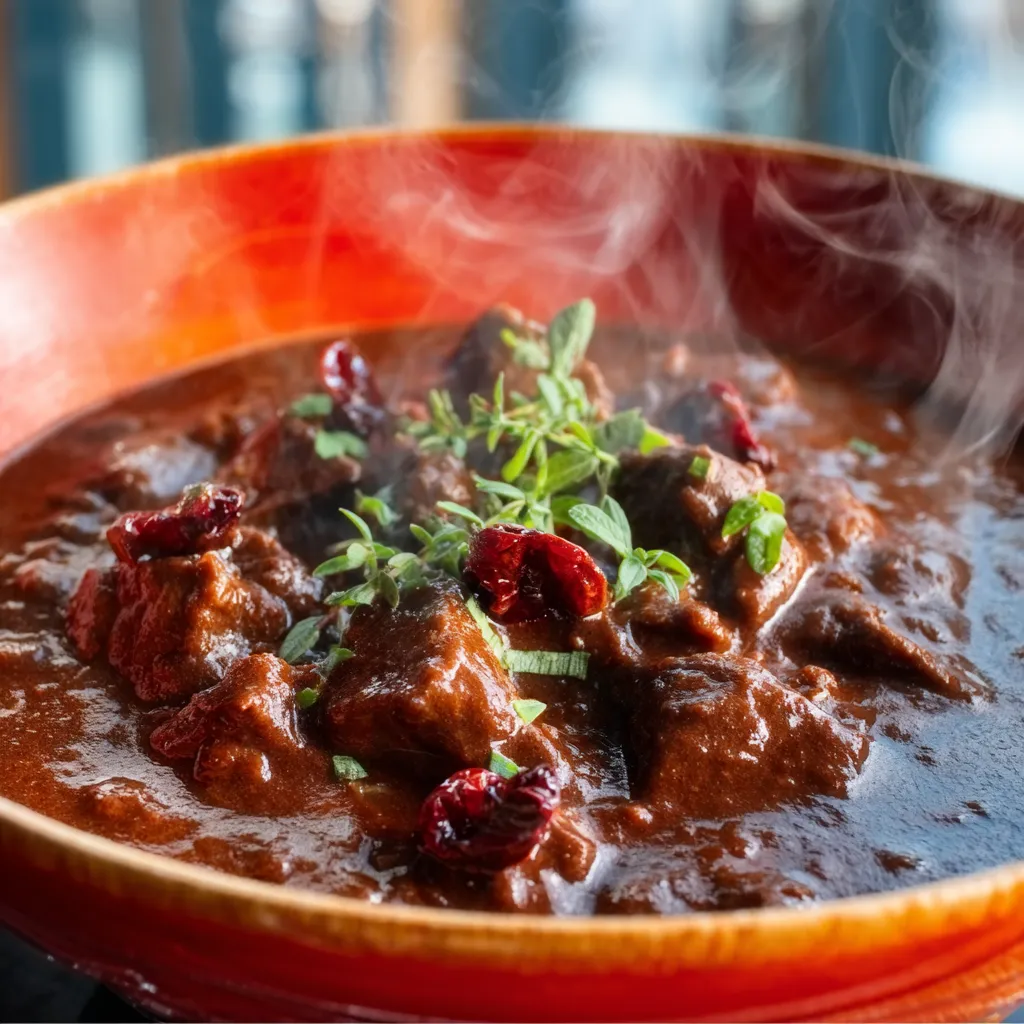

Best Authentic German Goulash Stew
Ingredients
Equipment
Method
- Prepare the beef by cutting it into uniform 1.5-inch cubes. Pat each piece thoroughly dry with paper towels to ensure a proper sear.
- Heat the lard or oil in a heavy-bottomed Dutch oven over medium-high heat until shimmering.
- Brown the beef in small batches, ensuring not to crowd the pan. Once browned on all sides, remove the meat to a plate and set aside.
- In the same pot, add the sliced onions. Use the moisture from the onions to scrape up the browned bits (fond) from the bottom. Cook over medium heat for 15-20 minutes until the onions are soft and deep golden brown.
- Stir in the tomato paste and minced garlic, cooking for about 1 minute until the paste darkens and becomes fragrant.
- Add the sweet paprika, smoked paprika, and caraway seeds. Stir constantly for 30 seconds to toast the spices and release their oils.
- Pour in the red wine to deglaze the pot, using a wooden spoon to lift any remaining flavor from the bottom. Let the liquid reduce by half.
- Return the beef and its accumulated juices to the pot. Add the beef broth and bay leaves.
- Bring the mixture to a gentle boil, then immediately reduce the heat to the lowest setting. Cover tightly and simmer for 2 to 3 hours, or until the beef is fork-tender.
- Taste the stew and season with salt and pepper. If the sauce is too thin, simmer uncovered for the final 20 minutes to reduce and thicken naturally.