
After years of testing in my own cozy kitchen, I’ve found that the secret to a truly transformative Guinness Shepherd’s Pie lies in the slow, patient reduction of the stout until it coats the back of a wooden spoon like dark velvet. This is the only recipe you will ever need because it respects the traditional roots of the dish while elevating the flavor profile to something almost celestial.
You see, my dear, many people rush the process, but the magic happens when the bitterness of the hops mellows into a deep, malty sweetness that perfectly complements the rich lamb.
I want you to feel confident and capable as we walk through this together. Cooking is not just about following a list of instructions; it is about understanding the ingredients and giving them the time they deserve to shine.
My Kitchen Secrets
- The Maillard Reaction: Always brown your meat in small batches to ensure it sears rather than steams, creating a savory foundation that defines the whole dish.
- The Stout Reduction: Never pour the Guinness and the stock in at the same time; let the stout bubble and reduce by half first to remove the harsh alcoholic bite.
- The Potato Texture: Use a ricer for your potatoes if you have one, as it prevents the starch from becoming “gluey” and keeps the topping light as a cloud.
The Essentials
In my kitchen, I always say that a dish is only as good as its humblest ingredient. For this Shepherd’s Pie, we are looking for freshness and quality, especially when it comes to the meat and the beer.
If you are in the mood for something a bit different but equally comforting, you might also enjoy my Shepherd’s Pie Casserole for those busier weeknights. But for a Sunday dinner where time is a gift, this Guinness-infused version is the gold standard.
- Ground Lamb: (Traditional Shepherd’s Pie uses lamb for its distinct, rich flavor and tender fat content).
- Guinness Draught: (The nitrogen-infused stout provides a creamy mouthfeel and a complex, roasted malt flavor).
- Russet Potatoes: (These high-starch potatoes are the best choice for achieving a fluffy, mashable texture that soaks up butter).
- Tomato Paste: (Cooking this down briefly removes the metallic “tinny” taste and adds a concentrated umami punch to the gravy).
- Beef or Lamb Stock: (Always use low-sodium so you can control the salt levels as the sauce reduces).
- Worcestershire Sauce: (This provides the necessary acidity and fermented depth to balance the heaviness of the meat).
- Carrots and Onions: (Known as the aromatic base, these provide a subtle sweetness that cuts through the rich stout).
- Fresh Rosemary and Thyme: (Woody herbs are essential for echoing the earthy notes of the lamb and the beer).
- Butter and Heavy Cream: (Do not skimp here; these are what make the potato topping feel like a warm hug).
- Egg Yolk: (Stirring this into the mash creates a beautiful, golden-brown crust when the pie is placed under the broiler).
Easy Alternatives
I know that sometimes our pantries aren’t as full as we’d like them to be. Cooking should be joyful, not stressful, so feel free to use what you have on hand.
- Ground Beef: If you use beef, the dish technically becomes a “Cottage Pie,” similar to my Crockpot Shepherd’s Pie, which is just as delicious.
- Dark Ale: If you cannot find Guinness, any local dark stout or even a heavy porter will work beautifully to provide that deep color.
- Frozen Peas and Corn: While I love fresh vegetables, a bag of frozen peas added at the very end maintains its bright color and snap.
- Dried Herbs: Use one-third the amount of dried herbs if fresh ones aren’t available, as dried leaves are much more concentrated.
- Sweet Potatoes: For a modern twist, you can top the pie with mashed sweet potatoes for a vibrant orange hue and extra vitamins.
Ways to Change It Up
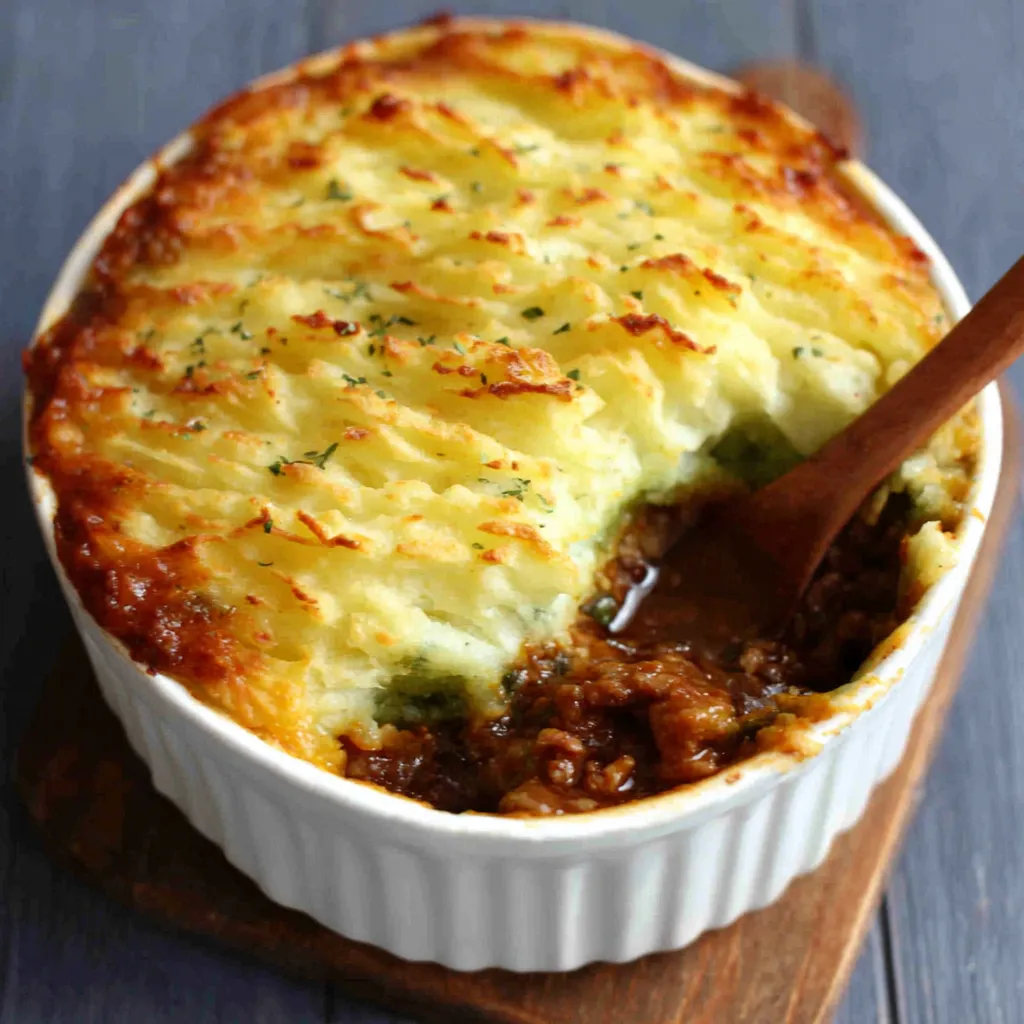
Once you have mastered the classic method, it is quite fun to play with the variables. I have spent decades tweaking my recipes to suit the moods of my family.
For instance, if you love the combination of beef and potatoes but want something with a bit more bite, you must try my Steak And Cheddar Potato Casserole. It uses similar flavor profiles but focuses on hearty chunks of steak.
You might also consider adding a layer of sharp Irish cheddar between the meat and the potatoes. This creates a “cheese barrier” that prevents the mashed potatoes from sinking into the gravy too quickly.
Another wonderful variation is to turn this into a “Deconstructed Pie.” I often do this by making a Shepherd’s Pie Soup, where the Guinness-infused broth is the star of the show.
Lastly, if you have extra Guinness left over in the pack, don’t let it go to waste. It is the secret ingredient in my Salted Dark Chocolate Stout Cake, which makes for a perfect dessert after this savory meal.
The Process
Now, let us get to the heart of the matter. Put on your favorite apron, pour yourself a small glass of something you enjoy, and let’s begin the process.
Step 1: Preparing the Potato Topping
Start by peeling your Russet potatoes and cutting them into even, two-inch chunks. Place them in a large pot of cold, salted water and bring them to a gentle boil.
Boiling them starting from cold water ensures the outside doesn’t turn to mush before the inside is cooked through. Once they are fork-tender, drain them and let them sit in the colander for two minutes to allow the steam to escape.
Step 2: Sautéing the Aromatics
While the potatoes are steaming, heat a large cast-iron skillet or heavy-bottomed pot over medium heat. Add a splash of oil and toss in your finely diced onions and carrots.
Sauté them until the onions are translucent and the carrots have softened slightly. This is the foundation of your flavor, so don’t rush this stage; let the vegetables sweat out their natural sugars.
Step 3: Browning the Meat
Push the vegetables to the edge of the pan and add your ground lamb to the center. Use your wooden spoon to break it apart into small crumbles.
Let it cook undisturbed for a few minutes until you see a dark brown crust forming. If you find there is too much rendered fat, you can carefully spoon some out, but leave enough to keep the dish moist.
Step 4: The Guinness Magic
Stir in your tomato paste and cook it for about sixty seconds until it turns a dark brick red. Now, pour in the Guinness, scraping the bottom of the pan to release all those flavorful brown bits.
Let the stout simmer and bubble away until it has reduced by at least half. This concentrates the flavor and ensures your final pie won’t be watery or overly bitter.
Step 5: Simmering the Filling
Add your beef stock, Worcestershire sauce, and fresh herbs to the pan. Bring it to a simmer and let it cook for about fifteen minutes.
The sauce should thicken into a rich, glossy gravy that smells of the Irish countryside. If you are using a slow cooker for other meals, you might recognize this thickening technique from my Slow Cooker Garlic Butter Beef Bites With Potatoes.
Step 6: Mashing and Assembling
Return to your potatoes and mash them with plenty of butter, heavy cream, and that single egg yolk. Season generously with salt and white pepper for a clean look.
Spread the meat mixture into a baking dish (if you aren’t using an oven-safe skillet). Spoon the potatoes over the top and use a fork to create little ridges and peaks across the surface.
Step 7: The Final Bake
Place the pie in a preheated oven at 400°F (200°C) for about twenty minutes. The filling should be bubbling up at the edges, and the potato peaks should be a deep, toasted gold.
If the top isn’t as brown as you’d like, pop it under the broiler for the last two minutes. Just stay close to the oven, as it can go from golden to burnt in a heartbeat!
What is the secret to achieving the best flavor when cooking with Guinness in this recipe?
The secret lies in the slow reduction of the Guinness stout. You should simmer it until it reduces by half and coats the back of a spoon, which mellows the bitterness and creates a deep, malty sweetness.
What is the difference between a Shepherd’s Pie and a Cottage Pie?
A traditional Shepherd’s Pie is made using ground lamb, while a Cottage Pie uses ground beef. Both versions are delicious and can be made using the same Guinness-infused method.
How can I make the mashed potato topping light and perfectly browned?
For a light texture, use a potato ricer to avoid a ‘gluey’ consistency. To get a golden-brown crust, mix an egg yolk into the mashed potatoes and use a fork to create ridges on the surface before baking.
Can I substitute dried herbs for fresh ones in this recipe?
Yes, you can use dried herbs if fresh rosemary and thyme are unavailable. However, since dried herbs are more concentrated, you should only use one-third of the amount called for in the fresh version.
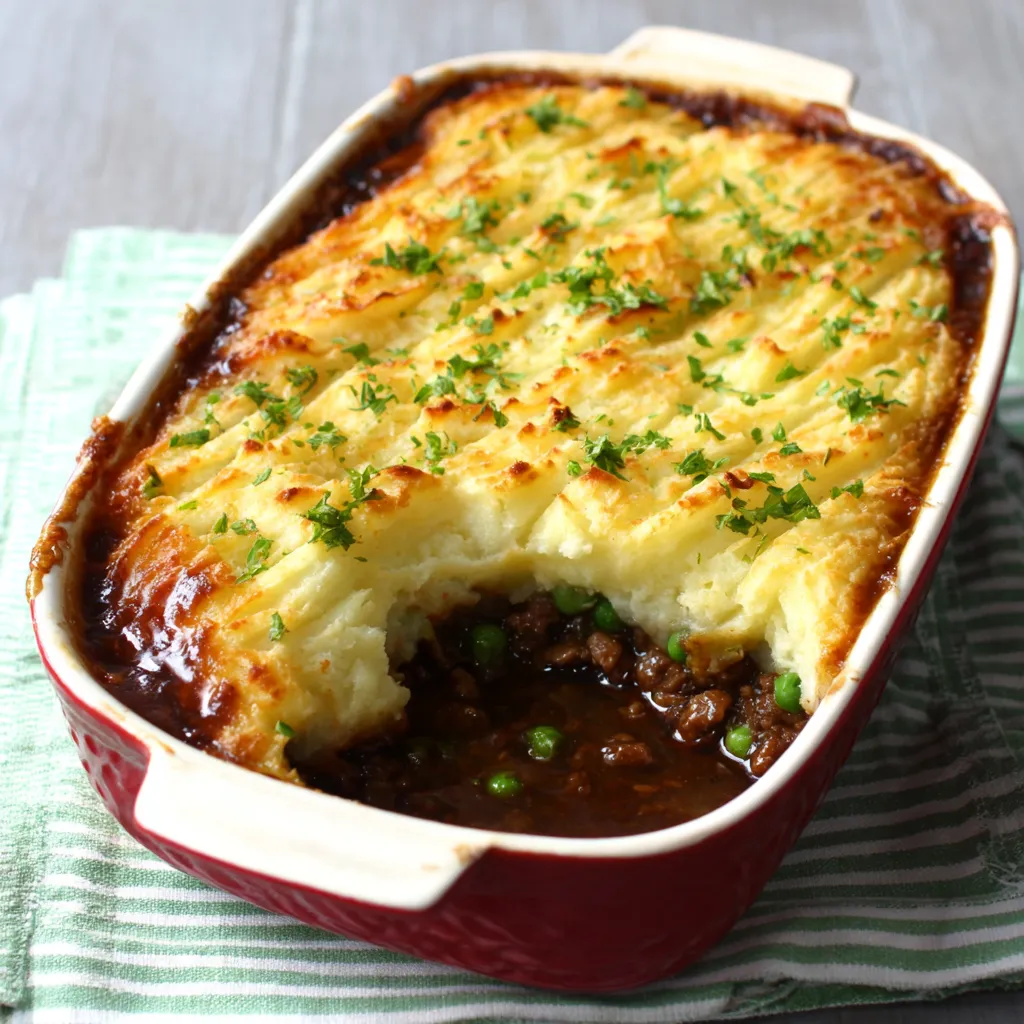

Ultimate Guinness Shepherd’s Pie
Ingredients
Equipment
Method
- Place peeled and cubed potatoes in a large pot of cold, salted water. Bring to a gentle boil and cook until fork-tender. Drain and let sit in a colander for two minutes to allow excess steam to escape.
- While the potatoes are cooking, heat oil in a large cast-iron skillet over medium heat. Sauté the finely diced onions and carrots until the onions are translucent and carrots have softened.
- Push the vegetables to the edge of the skillet and add the ground lamb to the center. Brown the meat in small batches, breaking it into crumbles, until a dark savory crust forms. Drain excess fat if necessary.
- Stir in the tomato paste and cook for 60 seconds until it reaches a dark brick red color.
- Pour in the Guinness Draught, scraping the bottom of the pan to deglaze and release the flavorful brown bits. Simmer until the liquid has reduced by half to concentrate the flavor.
- Add the stock, Worcestershire sauce, rosemary, and thyme. Bring to a simmer and cook for 15 minutes until the sauce thickens into a rich, glossy gravy. Stir in frozen peas if desired.
- Mash the potatoes using a ricer for the best texture. Stir in the butter, heavy cream, and egg yolk. Season generously with salt and white pepper.
- Spread the lamb filling into a baking dish (or leave in the oven-safe skillet). Spoon the mashed potatoes over the top, using a fork to create ridges and peaks across the surface.
- Bake in a preheated oven at 400°F (200°C) for approximately 20 minutes until the filling is bubbling and the potato peaks are toasted gold. Broil for the final 2 minutes if extra browning is desired.