
The Alchemy of Apple Cider and Chicken: A Scientific Perspective
The key to unlocking the potential of Rosemary Apple Cider Chicken lies in understanding the interplay of several scientific principles. First, we need to consider the Maillard reaction, that glorious chemical process that gives browned food its distinctive flavor and appearance. This reaction, which occurs between amino acids and reducing sugars, requires high heat and a relatively dry surface. The moisture content of both the chicken skin and the apple cider marinade can be a hindrance here, preventing proper browning. Secondly, we must consider the effect of acids (present in apple cider) on the chicken. While a brief marinade can tenderize the meat, prolonged exposure to acid can denature the proteins, resulting in a mushy or rubbery texture. Finding the sweet spot for marinating time is crucial. Finally, there’s the issue of flavor infusion. Rosemary, with its potent aroma and flavor compounds, needs to be properly incorporated into the dish. Simply sprinkling it on top won’t do the trick; we need to ensure that its essential oils are released and penetrate the chicken.The Recipe: Rosemary Apple Cider Chicken
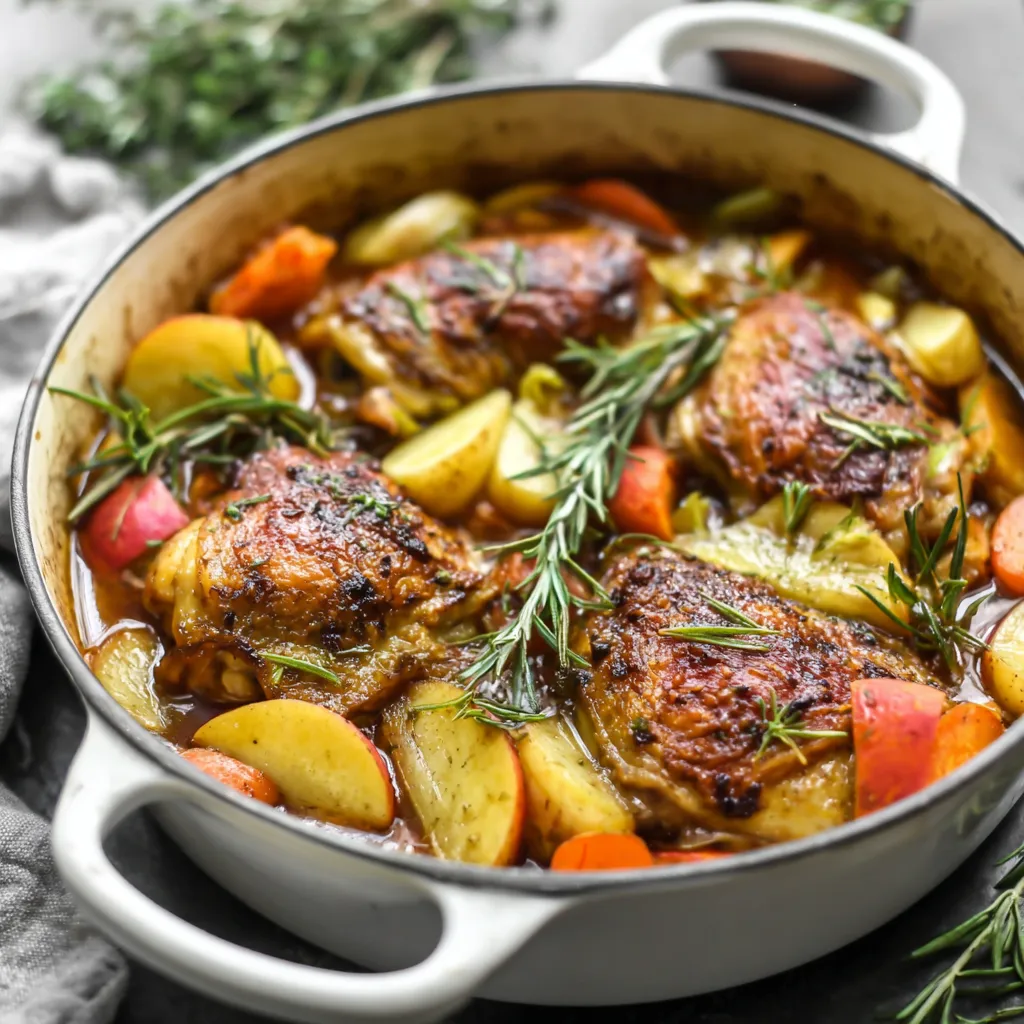
Ingredients:
- 4 bone-in, skin-on chicken pieces (thighs or drumsticks work best)
- 1 tbsp olive oil
- 1 medium onion, chopped
- 2 cloves garlic, minced
- 1 cup apple cider
- 1/2 cup chicken broth
- 2 tbsp apple cider vinegar
- 1 tbsp fresh rosemary, chopped
- 1 tsp dried thyme
- 1/2 tsp salt
- 1/4 tsp black pepper
- 1 tbsp butter
- 1 tbsp flour
Instructions:
- Prepare the Chicken: Pat the chicken pieces dry with paper towels. This is crucial for achieving crispy skin. Season generously with salt and pepper.
- Sear the Chicken: Heat olive oil in a large skillet over medium-high heat. Sear the chicken skin-side down for 5-7 minutes, or until golden brown and crispy. Flip and sear for another 3-5 minutes. Remove chicken from the skillet and set aside.
- Sauté Aromatics: Add the chopped onion to the skillet and sauté for 3-5 minutes, or until softened. Add the minced garlic and cook for another minute, until fragrant.
- Make the Sauce: Pour in the apple cider and apple cider vinegar, scraping up any browned bits from the bottom of the skillet. Add the chicken broth, rosemary, and thyme. Bring to a simmer.
- Thicken the Sauce (Optional): In a separate small bowl, whisk together the butter and flour to create a roux. Slowly whisk the roux into the simmering sauce. Continue to simmer until the sauce thickens slightly. This step can be skipped for a lighter sauce.
- Bake the Chicken: Return the chicken to the skillet, skin-side up. Spoon the sauce over the chicken. Transfer the skillet to a preheated oven at 375°F (190°C) and bake for 25-30 minutes, or until the chicken is cooked through and the internal temperature reaches 165°F (74°C).
- Rest and Serve: Remove the chicken from the oven and let it rest for 5-10 minutes before serving. This allows the juices to redistribute, resulting in more tender and flavorful meat. Serve with a side of roasted vegetables or mashed potatoes.
The Investigation: My Quest for the Perfect Rosemary Apple Cider Chicken
My journey to perfecting this recipe was anything but straightforward. Like many of you, I initially thought it was a simple matter of throwing everything into a pan and hoping for the best. My first few attempts were a disaster, resulting in either soggy skin, dry meat, or a flavor profile that was overwhelmingly sweet and lacking depth.The Soggy Skin Saga
The biggest hurdle was achieving crispy skin. I tried everything: high heat, low heat, different types of oil. Nothing seemed to work. The skin would either burn before the chicken was cooked through, or it would remain pale and flabby. Then, I had an “Aha!” moment. I realized that moisture was the enemy. The apple cider marinade, while adding delicious flavor, was also preventing the skin from browning properly.The Marinade Mayhem
Speaking of the marinade, I also experimented with different marinating times. I initially thought that a longer marinade would result in more flavorful chicken. However, I quickly discovered that over-marinating can lead to mushy, unpleasant texture. The apple cider vinegar, while adding brightness, was also contributing to this problem.The Rosemary Revelation
Finally, there was the issue of the rosemary. I initially used dried rosemary, which imparted a somewhat muted flavor. When I switched to fresh rosemary, the flavor was much more vibrant, but it still didn’t quite penetrate the chicken. I needed a way to release its essential oils and infuse them into the meat.The Browning Breakthrough
My breakthrough came when I combined several techniques. First, I started patting the chicken dry with paper towels before searing it. This removed excess moisture and allowed the skin to brown more easily. Second, I reduced the marinating time and used a smaller amount of apple cider vinegar. This helped to prevent the chicken from becoming mushy. Third, I added the rosemary to the pan while sautéing the onions and garlic. The heat helped to release its essential oils, infusing the entire dish with its fragrant aroma. Finally, searing the chicken skin-side down first, at a higher heat, created a beautiful crust that locked in moisture. The Crock Pot Bourbon Chicken recipe also taught me the importance of searing for maximum flavor development.The Technique: A Foolproof Method for Rosemary Apple Cider Chicken
Based on my culinary investigation, here’s a foolproof method for creating Rosemary Apple Cider Chicken that is both delicious and consistently successful:- Dry the Chicken: Pat the chicken pieces dry with paper towels. This is the single most important step for achieving crispy skin.
- Sear the Chicken: Sear the chicken skin-side down in a hot skillet until golden brown and crispy. This creates a flavorful crust and helps to lock in moisture.
- Sauté Aromatics: Sauté the onions and garlic in the skillet. This releases their flavor and creates a fragrant base for the sauce. Add the fresh rosemary at this stage to release its essential oils.
- Limit Marinating Time: If marinating, keep it short (no more than 30 minutes) and use a small amount of apple cider vinegar to prevent the chicken from becoming mushy.
- Use Fresh Rosemary: Fresh rosemary is far superior to dried rosemary in terms of flavor and aroma.
- Control Moisture: Reduce the amount of liquid in the recipe to promote browning and prevent soggy skin. Consider thickening the sauce with a roux.
- Rest the Chicken: Let the chicken rest for 5-10 minutes after cooking to allow the juices to redistribute, resulting in more tender and flavorful meat. This step is similar to the resting process in perfecting an Apple Crisp Recipe.
What’s the key to achieving crispy chicken skin in Rosemary Apple Cider Chicken?
The most important step is to pat the chicken pieces dry with paper towels before searing. Removing excess moisture allows the skin to brown properly in the hot skillet.
Why is it important to limit the marinating time when making Rosemary Apple Cider Chicken?
Prolonged exposure to the acid in apple cider vinegar can denature the chicken’s proteins, resulting in a mushy or rubbery texture. A short marinating time (no more than 30 minutes) is recommended.
Why does the recipe suggest searing the chicken before baking it?
Searing the chicken skin-side down first creates a flavorful crust and helps to lock in moisture, contributing to both the taste and texture of the final dish.
Why should I use fresh rosemary instead of dried?
Fresh rosemary has a far superior flavor and aroma compared to dried rosemary. Adding it while sautéing the onions and garlic releases its essential oils, infusing the entire dish with its fragrant aroma.
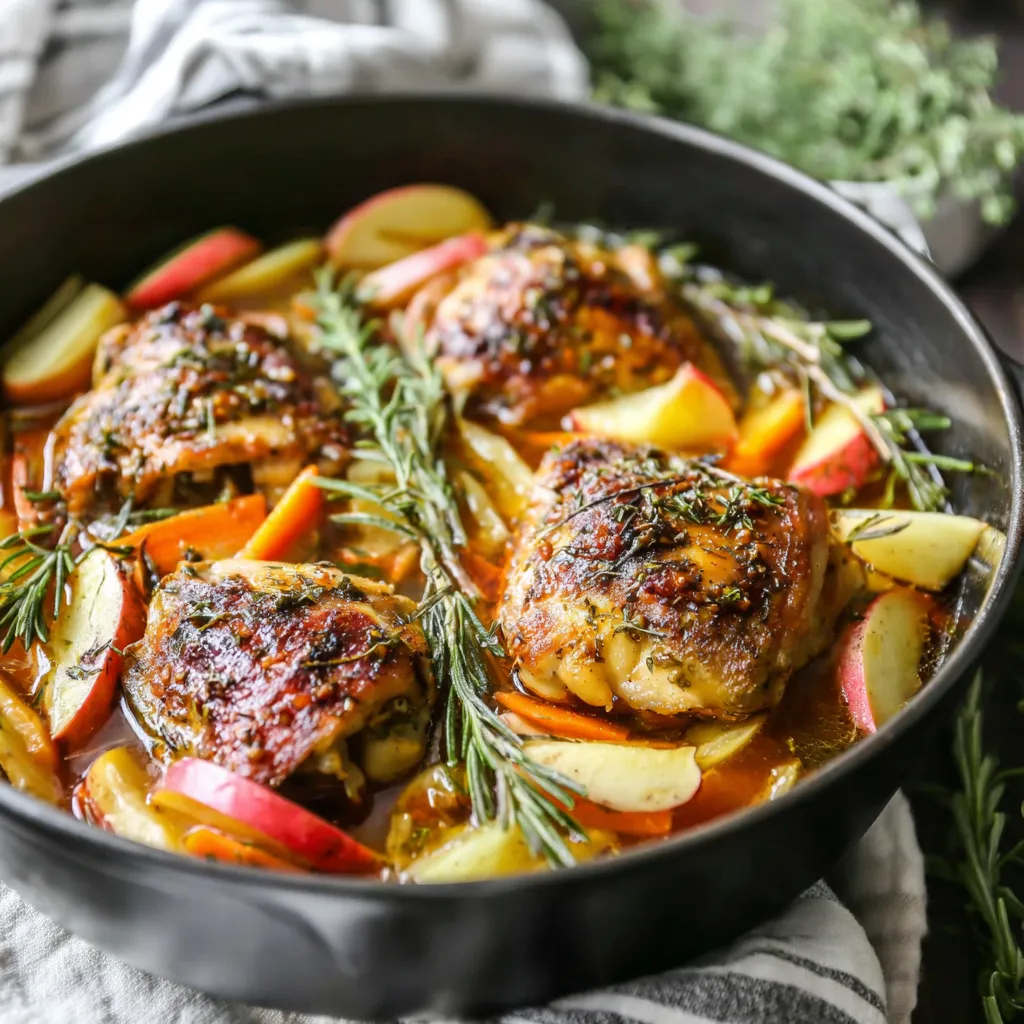

Easy Rosemary Apple Cider Chicken
This recipe delivers crispy-skinned, juicy rosemary apple cider chicken by searing the chicken, sautéing aromatics, and baking in a flavorful apple cider sauce. Careful attention to drying the chicken and limiting moisture are key to achieving the perfect texture and taste.
Ingredients
Equipment
Method
- Prepare the Chicken: Pat the chicken pieces dry with paper towels. Season generously with salt and pepper.
- Sear the Chicken: Heat olive oil in a large skillet over medium-high heat. Sear the chicken skin-side down for 5-7 minutes, or until golden brown and crispy. Flip and sear for another 3-5 minutes. Remove chicken from the skillet and set aside.
- Sauté Aromatics: Add the chopped onion to the skillet and sauté for 3-5 minutes, or until softened. Add the minced garlic and cook for another minute, until fragrant. Add the fresh rosemary at this stage.
- Make the Sauce: Pour in the apple cider and apple cider vinegar, scraping up any browned bits from the bottom of the skillet. Add the chicken broth and dried thyme. Bring to a simmer.
- Thicken the Sauce (Optional): In a separate small bowl, whisk together the butter and flour to create a roux. Slowly whisk the roux into the simmering sauce. Continue to simmer until the sauce thickens slightly. This step can be skipped for a lighter sauce.
- Bake the Chicken: Return the chicken to the skillet, skin-side up. Spoon the sauce over the chicken. Transfer the skillet to a preheated oven at 375°F (190°C) and bake for 25-30 minutes, or until the chicken is cooked through and the internal temperature reaches 165°F (74°C).
- Rest and Serve: Remove the chicken from the oven and let it rest for 5-10 minutes before serving. Serve with a side of roasted vegetables or mashed potatoes.
Notes
Patting the chicken dry is crucial for achieving crispy skin. For a deeper rosemary flavor, add the fresh rosemary while sautéing the onions and garlic to release its essential oils. Limiting marinating time to no more than 30 minutes with a small amount of apple cider vinegar prevents the chicken from becoming mushy. Store leftovers in an airtight container in the refrigerator for up to 3 days.