Unlocking the Secrets: The Science Behind Chicken Mushroom Soup
The magic of Chicken Mushroom Soup lies in the interplay of several key scientific principles. First, we have the Maillard reaction, responsible for that deeply savory, almost caramelized flavor. This reaction occurs when amino acids and reducing sugars are heated together, creating hundreds of different flavor compounds. Searing the chicken and mushrooms is crucial to unlock this potential. Then there’s the extraction of gelatin and collagen from the chicken bones, which contributes to the soup’s rich, velvety texture. Finally, the umami provided by the mushrooms, intensified by cooking, provides a savory depth that elevates the entire dish. This is why relying on low-sodium chicken broth or chicken stock can make a difference.The Ultimate Chicken Mushroom Soup Recipe
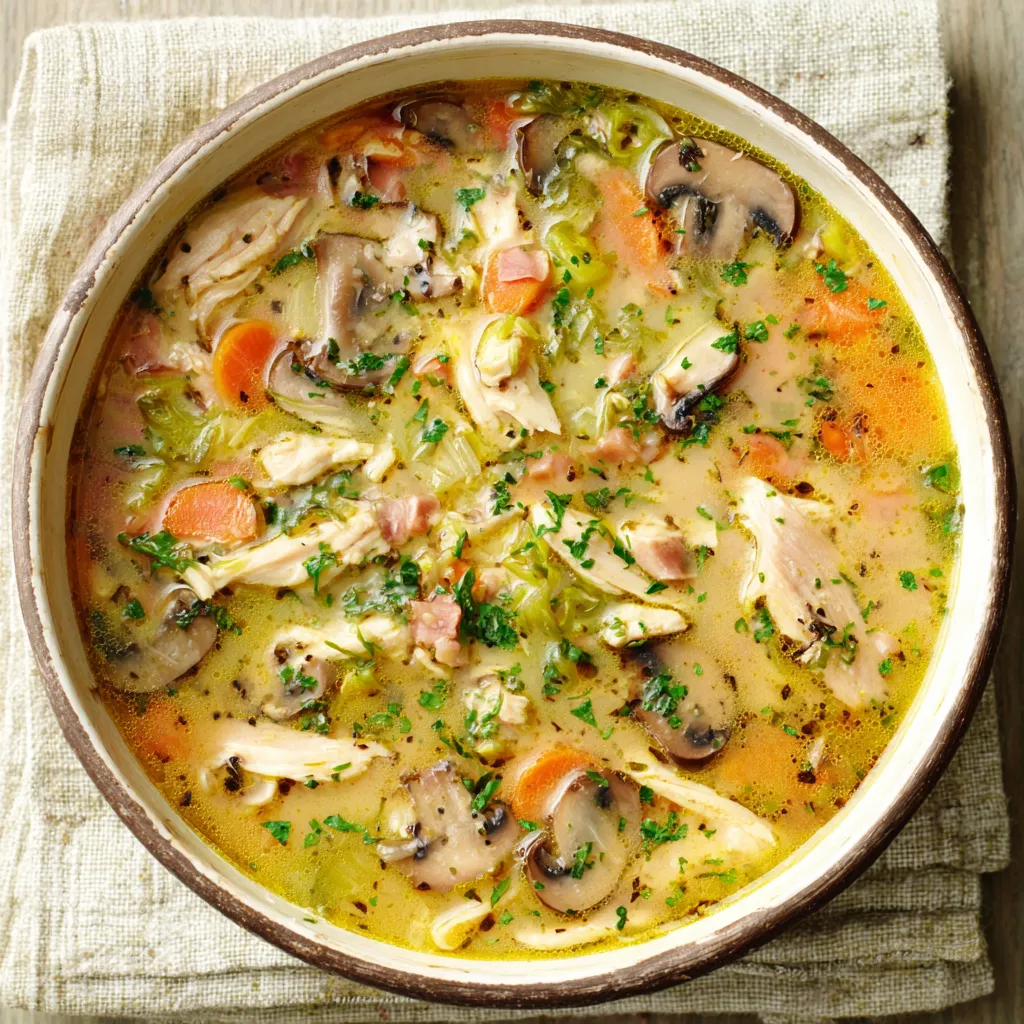
Ingredients:
- 1.5 lbs boneless, skinless chicken thighs, cut into 1-inch pieces
- 1 tbsp olive oil
- 1 tbsp butter
- 1 large onion, chopped
- 2 carrots, peeled and diced
- 2 celery stalks, diced
- 1 lb cremini mushrooms, sliced
- 8 oz shiitake mushrooms, stemmed and sliced
- 4 cloves garlic, minced
- 1/2 cup dry sherry (optional)
- 6 cups chicken broth
- 1 cup heavy cream
- 1/4 cup chopped fresh parsley
- 1 tbsp fresh thyme leaves
- Salt and pepper to taste
- 2 tbsp all-purpose flour (optional, for thickening)
Instructions:
- Sear the Chicken: Heat olive oil in a large pot or Dutch oven over medium-high heat. Season chicken with salt and pepper. Sear in batches until browned on all sides. Remove and set aside.
- Sauté Vegetables: Add butter to the pot. Add onion, carrots, and celery and cook until softened, about 5-7 minutes.
- Bloom the Mushrooms: Add cremini and shiitake mushrooms to the pot and cook, stirring occasionally, until they release their moisture and begin to brown, about 8-10 minutes. Don’t overcrowd the pan; cook in batches if necessary.
- Add Aromatics: Add garlic and thyme and cook for 1 minute more, until fragrant.
- Deglaze (Optional): If using sherry, pour it into the pot and scrape up any browned bits from the bottom. Cook until the sherry is almost evaporated, about 2-3 minutes.
- Simmer: Return the chicken to the pot. Pour in chicken broth. Bring to a boil, then reduce heat and simmer for 15-20 minutes, or until chicken is cooked through.
- Thicken (Optional): If you prefer a thicker soup, whisk flour with a little cold water to form a slurry. Slowly whisk the slurry into the soup and simmer until thickened, about 5 minutes.
- Finish: Stir in heavy cream and parsley. Season with salt and pepper to taste. Heat through but do not boil.
- Serve: Ladle into bowls and serve hot.
The Investigation: My Chicken Mushroom Soup Odyssey
My first few attempts were a disaster. Watery soup, bland flavor, rubbery chicken – you name it, I experienced it. But I wasn’t deterred. I was determined to crack the code of the perfect Chicken Mushroom Soup.The Initial Disaster: The Watery Broth
Like many of you, I initially thought that just throwing everything into a pot with some broth would be enough. I quickly learned that a watery broth is the enemy. The key, I discovered, is building flavor in layers and searing the ingredients. This is a common pitfall I see people encounter when trying to make Mexican Street Corn White Chicken Chili too.The Mushroom Revelation: Blooming for Maximum Flavor
Then, I had an “Aha!” moment when I realized the importance of properly cooking the mushrooms. Simply tossing them in with everything else resulted in soggy, flavorless mushrooms. The trick is to “bloom” them – cooking them over medium heat until they release their moisture, which then evaporates, allowing them to brown and develop a deep, earthy flavor. This also reminded me of how important the simmering process is for developing the flavors in Italian Penicillin Soup.The Chicken Conundrum: Tender vs. Rubbery
Achieving perfectly cooked chicken was another challenge. Overcooked chicken is dry and rubbery, while undercooked chicken is, well, not an option. I experimented with different cuts of chicken and different cooking times. I found that using chicken thighs, rather than chicken breasts, resulted in a more tender and flavorful result. Also, simmering the chicken gently, rather than boiling it, helped to keep it moist. The same principle applies to maintaining moistness in the Cozy Chicken Soup.The Cream Factor: Finding the Right Balance
Finally, there’s the cream. Some recipes call for a ton of cream, resulting in a soup that’s overly rich and heavy. Others use no cream at all, resulting in a soup that’s lacking in that luxurious, velvety texture. I found that using just a cup of heavy cream provided the perfect balance – enough to add richness and body without being overwhelming. Thinking about creaminess, I was reminded about how important the coconut milk is in Thai Chicken Soup Heaven.The Sherry Secret: The Unexpected Twist
An unexpected addition that elevated the soup was dry sherry. Deglazing the pot with sherry after sautéing the vegetables added a depth of flavor that I wasn’t expecting.The Technique: A Foolproof Method for Perfect Chicken Mushroom Soup
Here’s a summary of the foolproof method I developed:- Sear the Chicken: Brown the chicken pieces in batches to develop a rich, savory crust.
- Sauté the Aromatics: Build flavor by sautéing the onions, carrots, and celery until softened.
- Bloom the Mushrooms: Cook the mushrooms until they release their moisture and brown, unlocking their umami potential.
- Deglaze (Optional): Use dry sherry to deglaze the pot, adding depth of flavor.
- Simmer Gently: Simmer the soup gently, allowing the flavors to meld and the chicken to cook through without becoming rubbery. I also think this principle can be applied when making Cozy Chicken Stew, for example.
- Thicken (Optional): Use a flour slurry to thicken the soup to your desired consistency.
- Finish with Cream and Herbs: Stir in heavy cream and fresh herbs for a luxurious and flavorful finish. This part always reminds me of the finishing touches I give to my Marry Me Chicken Soup.
Why is searing the chicken and blooming the mushrooms important for this soup?
Searing the chicken allows the Maillard reaction to occur, creating a deeply savory flavor. Blooming the mushrooms releases their moisture and allows them to brown, unlocking their umami potential and preventing a soggy texture.
What is the purpose of adding dry sherry to the Chicken Mushroom Soup?
Deglazing the pot with dry sherry after sautéing the vegetables adds a depth of flavor to the soup.
Why does the recipe call for chicken thighs instead of chicken breasts?
Chicken thighs result in a more tender and flavorful result compared to chicken breasts. Simmering the chicken gently also helps to keep it moist.
How can I prevent the chicken in my soup from becoming rubbery?
Use chicken thighs instead of chicken breasts and simmer the chicken gently, rather than boiling it. This helps to keep the chicken moist and tender.
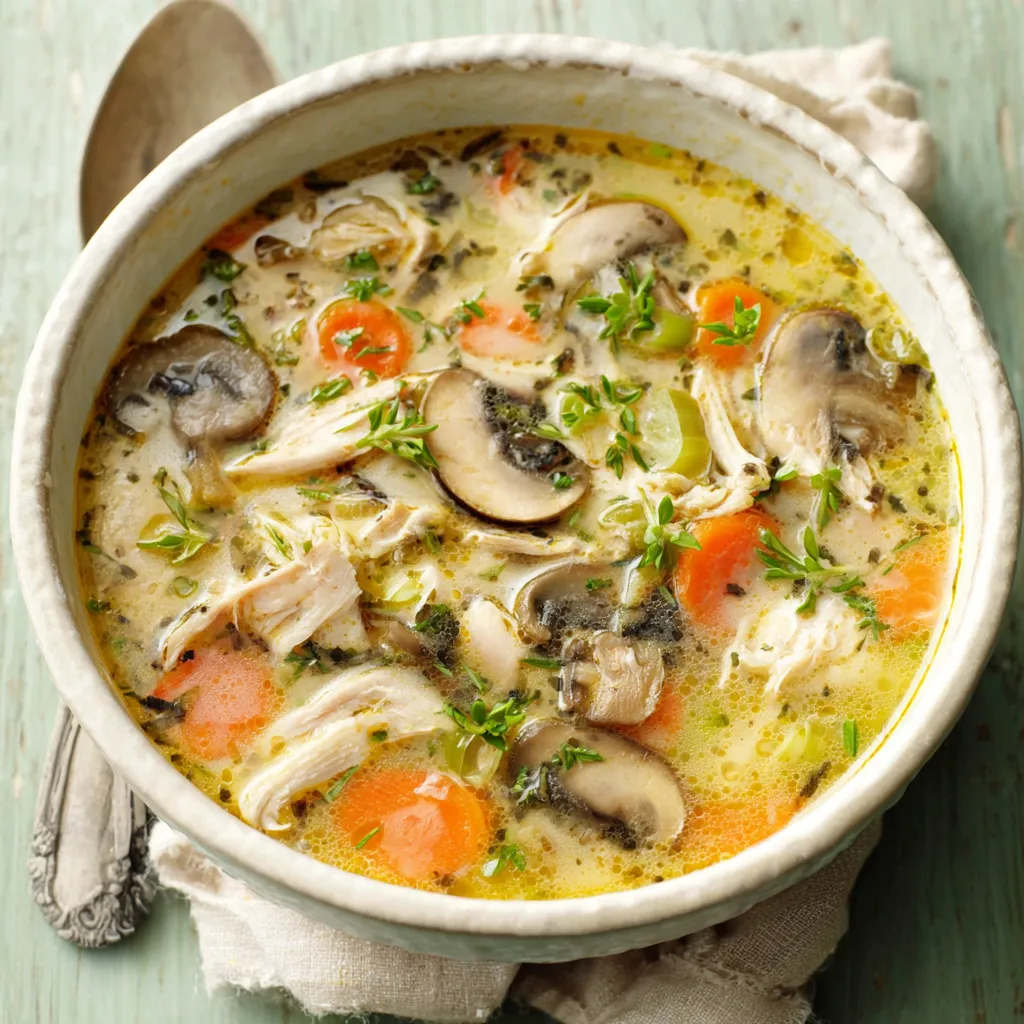

Best Chicken Mushroom Soup
This recipe creates a rich and flavorful chicken mushroom soup by searing the chicken and mushrooms to develop deep umami flavors. The addition of sherry and heavy cream elevates the soup to a luxurious and comforting meal.
Ingredients
Equipment
Method
- Heat olive oil in a large pot or Dutch oven over medium-high heat. Season chicken with salt and pepper.
- Sear chicken in batches until browned on all sides. Remove and set aside.
- Add butter to the pot. Add onion, carrots, and celery and cook until softened, about 5-7 minutes.
- Add cremini and shiitake mushrooms to the pot and cook, stirring occasionally, until they release their moisture and begin to brown, about 8-10 minutes. Don’t overcrowd the pan; cook in batches if necessary.
- Add garlic and thyme and cook for 1 minute more, until fragrant.
- If using sherry, pour it into the pot and scrape up any browned bits from the bottom. Cook until the sherry is almost evaporated, about 2-3 minutes.
- Return the chicken to the pot. Pour in chicken broth. Bring to a boil, then reduce heat and simmer for 15-20 minutes, or until chicken is cooked through.
- If you prefer a thicker soup, whisk flour with a little cold water to form a slurry. Slowly whisk the slurry into the soup and simmer until thickened, about 5 minutes.
- Stir in heavy cream and parsley. Season with salt and pepper to taste. Heat through but do not boil.
- Ladle into bowls and serve hot.
Notes
For a richer flavor, use homemade chicken broth. The soup can be stored in the refrigerator for up to 3 days. For a dairy-free version, substitute the heavy cream with coconut milk or cashew cream. You can also add other vegetables like potatoes or corn.