The Alchemy of Aromatics: Understanding Stuffing’s Core Principles
At its heart, stuffing (or dressing, depending on where you hail from) is a study in flavor infusion and moisture management. We’re essentially taking relatively bland bread and transforming it into something deeply savory and comforting. The key players in this transformation are:- Bread Selection: The type of bread dictates the stuffing’s texture and ability to absorb flavors. Stale bread is crucial; it’s drier and absorbs more liquid without becoming mushy. Different breads offer different flavors; sourdough provides tang, while challah adds richness.
- Aromatics: This is where the magic happens. Onions, celery, garlic, and herbs like sage, thyme, and rosemary are the building blocks of that quintessential Thanksgiving aroma. Sautéing these aromatics in butter or olive oil releases their volatile compounds, creating a flavorful base for the entire dish.
- Fat: Fat carries flavor and adds richness. Butter is a classic choice, but bacon fat, sausage drippings, or even olive oil can be used for different flavor profiles. The fat coats the bread, preventing it from becoming waterlogged and contributing to a more tender texture.
- Broth/Liquid: The liquid moistens the bread and carries the flavors of the aromatics throughout the stuffing. Chicken broth is the most common choice, but vegetable broth or even apple cider can be used to add complexity.
- Eggs (Optional): Eggs act as a binder, helping the stuffing hold its shape and preventing it from crumbling. However, too many eggs can result in a dense, almost custard-like texture.
- Texture Enhancers (Optional): Things like nuts, dried cranberries, or crumbled sausage can add textural contrast and additional flavor dimensions.
The Quintessential Thanksgiving Stuffing Recipe
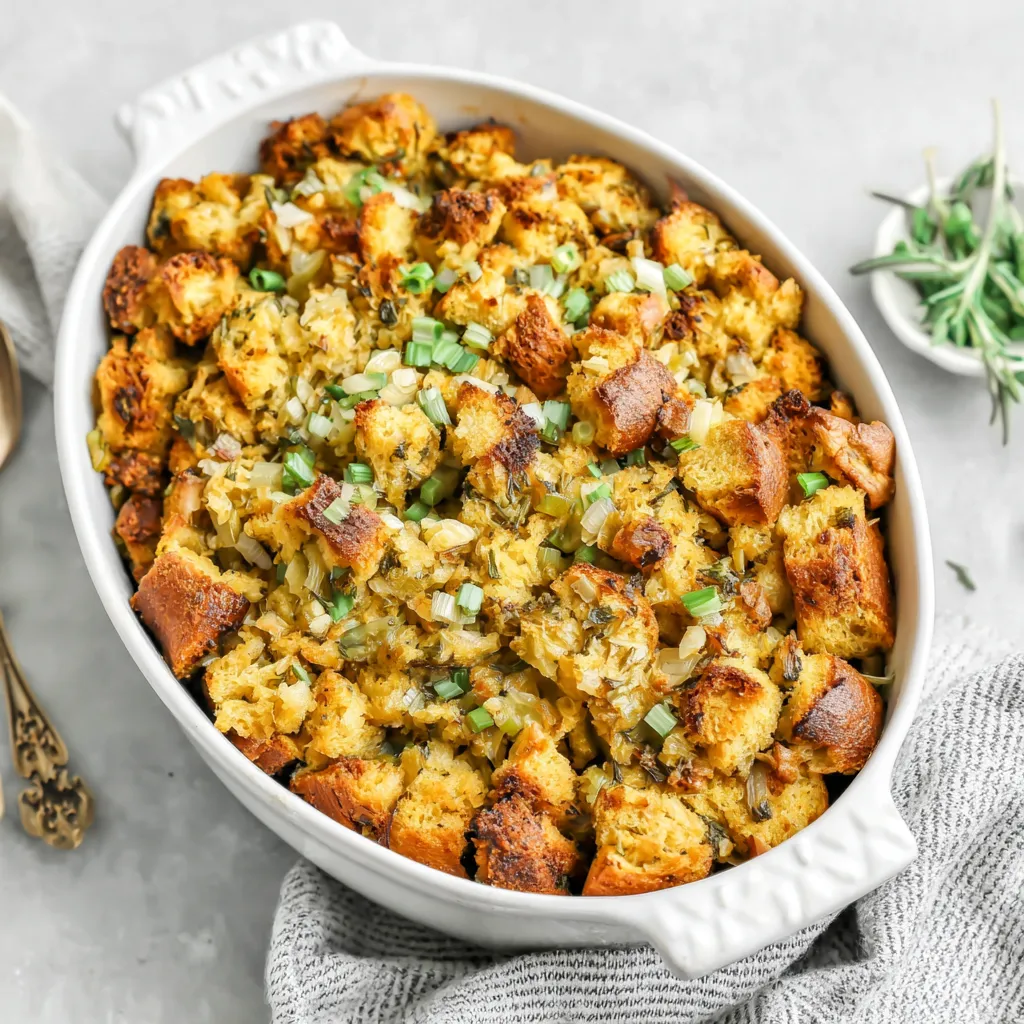
Ingredients:
- 1 loaf (about 1 pound) stale crusty bread, such as sourdough or Italian bread, cut into 1-inch cubes
- 1/2 cup (1 stick) unsalted butter
- 1 large yellow onion, chopped
- 2 celery stalks, chopped
- 2 cloves garlic, minced
- 1 tablespoon fresh sage, chopped
- 1 tablespoon fresh thyme, chopped
- 1/2 teaspoon dried rosemary, crushed
- 6 cups chicken broth, plus more as needed
- 1/2 cup chopped fresh parsley
- 1/2 cup chopped walnuts or pecans, toasted (optional)
- 1/2 cup dried cranberries (optional)
- 1 large egg, lightly beaten (optional)
- Salt and freshly ground black pepper to taste
Instructions:
- Preheat oven to 350°F (175°C).
- Spread the bread cubes on a baking sheet and bake for 10-15 minutes, or until lightly toasted and dried. This helps prevent the stuffing from becoming soggy.
- In a large skillet or Dutch oven, melt the butter over medium heat. Add the onion and celery and cook until softened, about 5-7 minutes. Add the garlic and cook for another minute until fragrant.
- Stir in the sage, thyme, and rosemary. Cook for another minute to release their aromas.
- Pour the chicken broth into the skillet and bring to a simmer. Season with salt and pepper to taste.
- In a large bowl, combine the toasted bread cubes, parsley, toasted nuts (if using), and dried cranberries (if using).
- Pour the broth mixture over the bread mixture and toss gently to combine. Make sure all the bread is moistened, but not soaking wet. Add more broth if needed.
- If using, stir in the beaten egg.
- Transfer the stuffing to a greased 9×13 inch baking dish.
- Cover the baking dish with foil and bake for 30 minutes. Remove the foil and bake for another 15-20 minutes, or until the top is golden brown and the stuffing is heated through.
- Let the stuffing rest for 10 minutes before serving.
Confessions of a Stuffing Scientist: My Culinary Investigation
My quest for the perfect Thanksgiving stuffing began, as many culinary journeys do, with disaster. My first few attempts were a disaster: either dry and crumbly or a gluey, flavorless mess. Like many of you, I initially thought stuffing was just throwing some bread and broth together. I was wrong. So very wrong.The Soggy Saga: My First Failure
My initial mistake was underestimating the importance of dry bread. I used fresh bread, thinking it would be more flavorful. Instead, it absorbed all the broth like a sponge, resulting in a soggy, unappetizing mass. It tasted like wet bread. The first iteration was a lesson in bread science. It also taught me to never underestimate the power of proper toasting. The toasting step is crucial, creating a protective barrier that prevents excessive moisture absorption.The Aromatic Awakening: Discovering the Power of Flavor
Next, I focused on the aromatics. I used dried herbs sparingly, thinking they were “good enough.” The result was bland and lifeless. Then, I had an “Aha!” moment when I realized the importance of fresh herbs and properly sautéing the aromatics. Sautéing onions, celery, and garlic in butter until they are softened and fragrant releases their volatile compounds, creating a deep, savory base for the stuffing. Fresh herbs, like sage, thyme, and rosemary, add a bright, herbaceous note that dried herbs simply can’t replicate. I even experimented with different fats. While butter is classic, I found that using a combination of butter and bacon fat added a smoky, savory depth that was incredibly satisfying. It made me wonder about making some Green Bean Bake with bacon fat instead of butter, too.The Moisture Mystery: Finding the Perfect Balance
Finding the right amount of broth was another challenge. Too little, and the stuffing was dry and crumbly. Too much, and it was a soggy mess. The key, I discovered, was to add the broth gradually, until the bread was moistened but not soaking wet. It’s a delicate balance, and it requires paying close attention to the texture of the bread. I also learned that the type of bread matters. Sourdough, with its slightly sour tang, holds up well to moisture and adds a unique flavor. Italian bread is another good choice, as it’s sturdy and absorbent.The Egg Enigma: To Bind or Not to Bind?
The inclusion of eggs is a divisive topic in the stuffing world. Some swear by them, while others avoid them like the plague. I experimented with and without eggs, and I found that a single egg, lightly beaten, can help the stuffing hold its shape without making it too dense. However, too many eggs can result in a custard-like texture, which is not what I was aiming for. For a side such as Green Bean Casserole, eggs are definitely a requirement.The Unexpected Twist: Embracing Add-Ins
Finally, I started experimenting with add-ins. Toasted nuts, like walnuts or pecans, added a satisfying crunch. Dried cranberries provided a touch of sweetness and tartness. And crumbled sausage added a savory, meaty element that was simply irresistible. These add-ins elevate the stuffing from a simple side dish to a complex and flavorful creation. I thought about adding some fresh cranberries to make my Cranberry Saucee even more festive! I bet Grandma would love that. Maybe even more than her Grandma’s Secret Green Beans.The Foolproof Formula: A Step-by-Step Guide to Perfect Stuffing
After years of trial and error, I’ve developed a foolproof method for making perfect Thanksgiving stuffing every time.- Choose the Right Bread: Opt for stale, crusty bread, such as sourdough or Italian bread. Toast it lightly to prevent sogginess.
- Sauté the Aromatics: Cook onions, celery, and garlic in butter (or a combination of butter and bacon fat) until softened and fragrant. This is the foundation of your stuffing’s flavor.
- Use Fresh Herbs: Fresh sage, thyme, and rosemary add a bright, herbaceous note that dried herbs can’t match.
- Add Broth Gradually: Pour the broth over the bread mixture until it is moistened but not soaking wet. Be careful not to add too much liquid.
- Consider an Egg (Optional): A single, lightly beaten egg can help the stuffing hold its shape without making it too dense.
- Experiment with Add-Ins: Toasted nuts, dried cranberries, or crumbled sausage can add textural contrast and additional flavor dimensions.
- Bake Covered, Then Uncovered: Baking the stuffing covered for the first 30 minutes helps to keep it moist. Removing the foil for the last 15-20 minutes allows the top to brown and crisp up.
- Let it Rest: Allow the stuffing to rest for 10 minutes before serving. This allows the flavors to meld and the texture to set.
Why is stale bread recommended for Thanksgiving stuffing?
Stale bread is crucial because it’s drier and absorbs more liquid without becoming mushy, preventing the stuffing from becoming soggy.
What role do aromatics play in the flavor of stuffing?
Aromatics like onions, celery, garlic, and fresh herbs (sage, thyme, rosemary) are the building blocks of the stuffing’s flavor. Sautéing them releases their volatile compounds, creating a flavorful base.
Is using egg in stuffing necessary, and what does it do?
Using egg is optional. A single, lightly beaten egg acts as a binder, helping the stuffing hold its shape and preventing it from crumbling. However, too many eggs can result in a dense, custard-like texture.
What is the best way to avoid soggy stuffing?
Use stale, crusty bread and toast it lightly before adding it to the stuffing. Also, add broth gradually until the bread is moistened but not soaking wet.
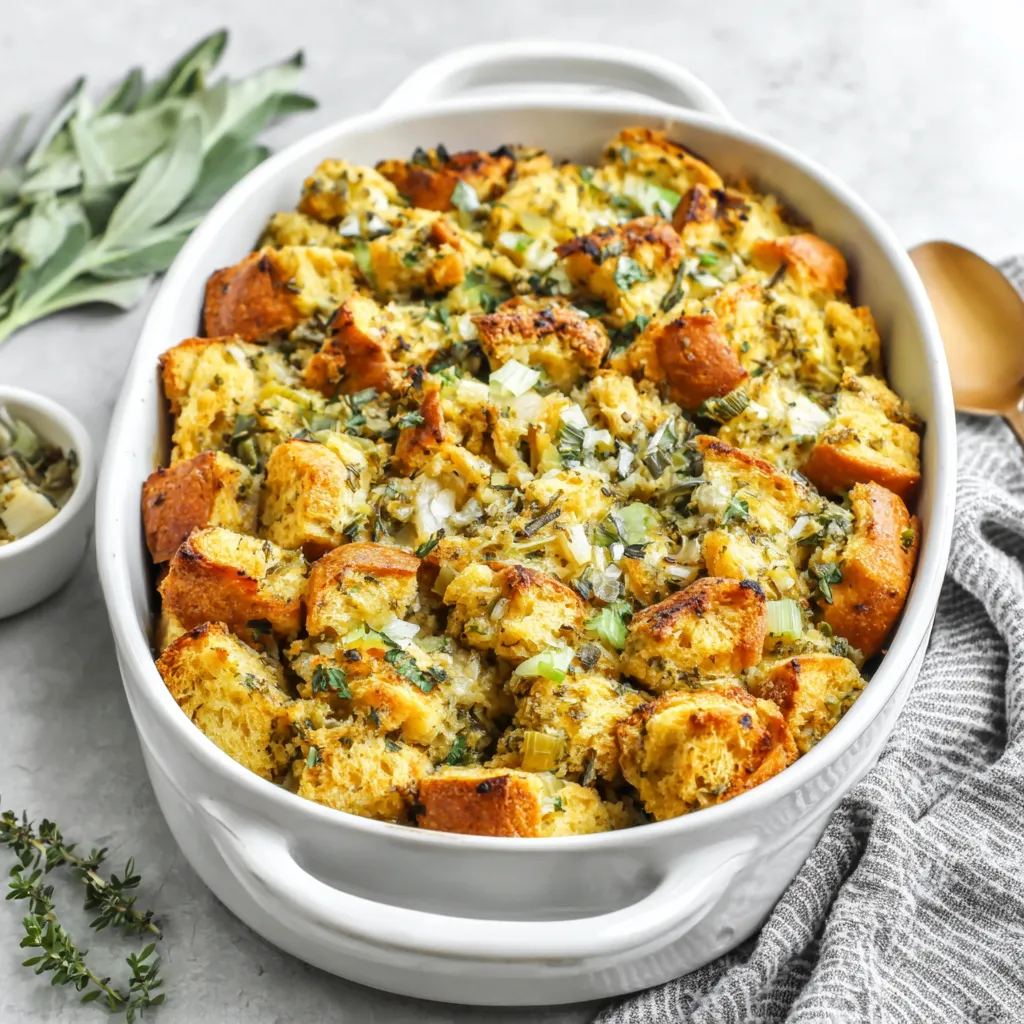

Best Thanksgiving Stuffing Recipe
This Thanksgiving stuffing recipe focuses on maximizing flavor and achieving the perfect balance of moisture and texture. It uses stale bread, sautéed aromatics, fresh herbs, and optional add-ins like nuts and cranberries for a classic and satisfying side dish. Baking covered then uncovered ensures a moist interior and golden-brown top.
Ingredients
Equipment
Method
- Preheat oven to 350°F (175°C).
- Spread the bread cubes on a baking sheet and bake for 10-15 minutes, or until lightly toasted and dried. This helps prevent the stuffing from becoming soggy.
- In a large skillet or Dutch oven, melt the butter over medium heat. Add the onion and celery and cook until softened, about 5-7 minutes. Add the garlic and cook for another minute until fragrant.
- Stir in the sage, thyme, and rosemary. Cook for another minute to release their aromas.
- Pour the chicken broth into the skillet and bring to a simmer. Season with salt and pepper to taste.
- In a large bowl, combine the toasted bread cubes, parsley, toasted nuts (if using), and dried cranberries (if using).
- Pour the broth mixture over the bread mixture and toss gently to combine. Make sure all the bread is moistened, but not soaking wet. Add more broth if needed.
- If using, stir in the beaten egg.
- Transfer the stuffing to a greased 9×13 inch baking dish.
- Cover the baking dish with foil and bake for 30 minutes.
- Remove the foil and bake for another 15-20 minutes, or until the top is golden brown and the stuffing is heated through.
- Let the stuffing rest for 10 minutes before serving.
Notes
For a richer flavor, use a combination of butter and bacon fat. You can substitute vegetable broth or apple cider for chicken broth. Store leftovers in an airtight container in the refrigerator for up to 3 days. For added flavor and texture, consider adding crumbled cooked sausage.