The Alchemy of the Perfect Potato Cake
The secret to a truly exceptional cheesy savory stuffed potato cake lies in understanding the delicate balance of starch, moisture, and heat. Potatoes, being primarily composed of starch, undergo a fascinating transformation when cooked. When heated in water, starch granules absorb moisture and swell, a process known as gelatinization. This is what gives mashed potatoes their creamy texture. However, excessive moisture is the enemy of crispy fried cakes. The trick is to achieve sufficient gelatinization for binding while minimizing excess water. The addition of egg acts as a further binding agent, and also contributes to a richer flavor. The cheese, of course, melts and creates that gooey, irresistible center, but its moisture content also needs to be factored in. This is all important to keep in mind while considering other comfort food sides, and how they are also made.The Recipe: Cheesy Savory Stuffed Potato Cakes of Glory
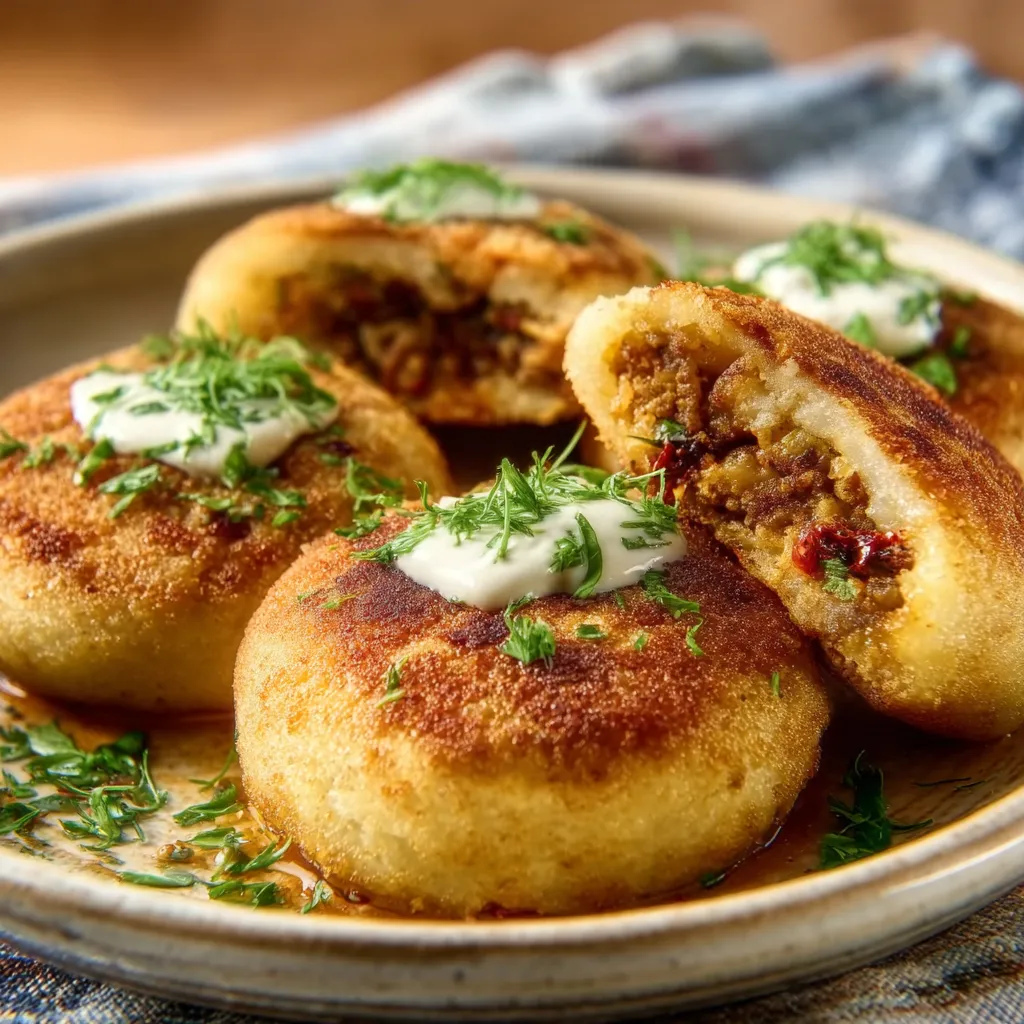
Yields
- Approximately 8 potato cakes
Prep Time
- 30 minutes
Cook Time
- 20 minutes
Ingredients
- 2 lbs Russet potatoes, peeled and quartered
- 1 large egg, lightly beaten
- 1/2 cup all-purpose flour, plus more for dusting
- 1/4 cup grated Parmesan cheese
- 2 tablespoons finely chopped chives or green onions
- 1 teaspoon salt
- 1/2 teaspoon black pepper
- 4 oz mozzarella cheese, cut into 8 cubes
- 4 oz cheddar cheese, cut into 8 cubes
- 1/4 cup vegetable oil, for frying
- Optional: Sour cream or your favorite dipping sauce, for serving
Equipment
- Large pot
- Potato ricer or masher
- Large mixing bowl
- Skillet or frying pan
Instructions
- Boil the Potatoes: Place the potatoes in a large pot and cover with cold water. Bring to a boil and cook until tender, about 15-20 minutes. Drain well.
- Rice or Mash: While still hot, rice the potatoes or mash them thoroughly. Ricing will yield a smoother texture, but mashing works just fine. Be sure to eliminate lumps.
- Combine Ingredients: In a large mixing bowl, combine the mashed potatoes, egg, flour, Parmesan cheese, chives, salt, and pepper. Mix well until all ingredients are thoroughly incorporated.
- Form the Cakes: Take a generous tablespoon of the potato mixture and flatten it into a disc in the palm of your hand. Place a cube of mozzarella cheese and a cube of cheddar cheese in the center. Gently bring the edges of the potato mixture up and around the cheese, forming a ball. Flatten the ball slightly into a cake shape. Repeat with the remaining potato mixture and cheese.
- Dust with Flour: Lightly dust each potato cake with flour, ensuring that they are evenly coated. This will help them crisp up nicely in the pan.
- Fry the Cakes: Heat the vegetable oil in a large skillet over medium heat. Once the oil is hot, carefully place the potato cakes in the skillet, being careful not to overcrowd the pan.
- Cook to Golden Perfection: Cook for about 3-4 minutes per side, or until golden brown and crispy. The cheese should be melted and gooey inside.
- Serve Immediately: Remove the potato cakes from the skillet and place them on a paper towel-lined plate to drain any excess oil. Serve immediately with sour cream or your favorite dipping sauce.
The Investigation: My Quest for Potato Cake Supremacy
My journey to creating the ultimate cheesy savory stuffed potato cake was not without its trials and tribulations. Like many of you, I initially thought it was as simple as mashing some potatoes, adding cheese, and frying. Oh, how wrong I was!The Soggy Start
My first few attempts were a disaster. The potato cakes would fall apart in the pan, the cheese would leak out, and the texture was disappointingly soggy. I realized that the moisture content was the primary culprit. I considered adding breadcrumbs, but I was looking for a gluten-free option. I also tried a different recipe, Garlic Parmesan Potato Chicken, but that was more of a complete meal and I was still searching for the perfect potato cake.The Starch Revelation
Then, I had an “Aha!” moment. I remembered learning about the importance of starch in baking. I started experimenting with different types of potatoes, ultimately settling on Russets for their high starch content. I also discovered the importance of ricing the potatoes while they were still hot. Ricing, as opposed to simply mashing, breaks down the starch more effectively, resulting in a smoother, less gummy texture. I also learned that using an egg helps bind the mixture.The Cheese Conundrum
The cheese presented another challenge. Some cheeses melted too quickly and leaked out, while others didn’t melt enough. After some trial and error, I found that a combination of mozzarella and cheddar provided the perfect balance of meltiness and flavor. I also experimented with different cheese combinations, but this particular blend was a winner, reminding me somewhat of the cheesy goodness in Steak Cheddar Potato Perfection, only in a different form.The Frying Finesse
Finally, the frying technique proved crucial. I experimented with different oils and cooking temperatures. I found that vegetable oil heated to medium heat provided the best results. It allowed the potato cakes to cook through evenly without burning on the outside. I also learned the importance of not overcrowding the pan, which can lower the oil temperature and result in soggy cakes.The Technique: Your Foolproof Guide to Potato Cake Perfection
Here’s a step-by-step guide to mastering the art of cheesy savory stuffed potato cake making, based on my intensive research:- Choose the Right Potatoes: Opt for high-starch potatoes like Russets.
- Rice or Mash Hot: Rice or mash the potatoes thoroughly while they are still hot to break down the starch and create a smooth texture.
- Minimize Moisture: Ensure the potatoes are well-drained after boiling. You can even spread them out on a baking sheet for a few minutes to allow any excess moisture to evaporate.
- Bind with Egg: Add a lightly beaten egg to the potato mixture to help bind the ingredients together.
- Use the Right Cheese: A combination of mozzarella and cheddar provides a good balance of meltiness and flavor.
- Dust with Flour: Lightly dust the potato cakes with flour before frying to help them crisp up.
- Fry at Medium Heat: Fry the potato cakes in vegetable oil over medium heat to ensure they cook through evenly without burning.
- Don’t Overcrowd the Pan: Fry the potato cakes in batches to avoid lowering the oil temperature.
- Serve Immediately: Serve the potato cakes immediately while they are still hot and crispy.
Why are Russet potatoes recommended for these cheesy potato cakes?
Russet potatoes are recommended because of their high starch content, which is important for achieving the right texture. The starch helps bind the potato cakes together and creates a smoother, less gummy result when the potatoes are riced or mashed.
What is the key to preventing soggy potato cakes?
The key to preventing soggy potato cakes is to minimize moisture. This involves using high-starch potatoes, ensuring they are well-drained after boiling, and even spreading them out to allow excess moisture to evaporate. Frying in batches at medium heat also prevents the oil temperature from dropping, which can lead to soggy cakes.
Why is it important to rice or mash the potatoes while they are still hot?
Ricing or mashing the potatoes while they are still hot helps to break down the starch more effectively. This results in a smoother texture and prevents the potato cakes from becoming gummy.
What is the best cheese combination for the stuffed potato cakes and why?
The recipe recommends a combination of mozzarella and cheddar cheese. This blend provides the perfect balance of meltiness and flavor for the gooey center of the potato cakes.
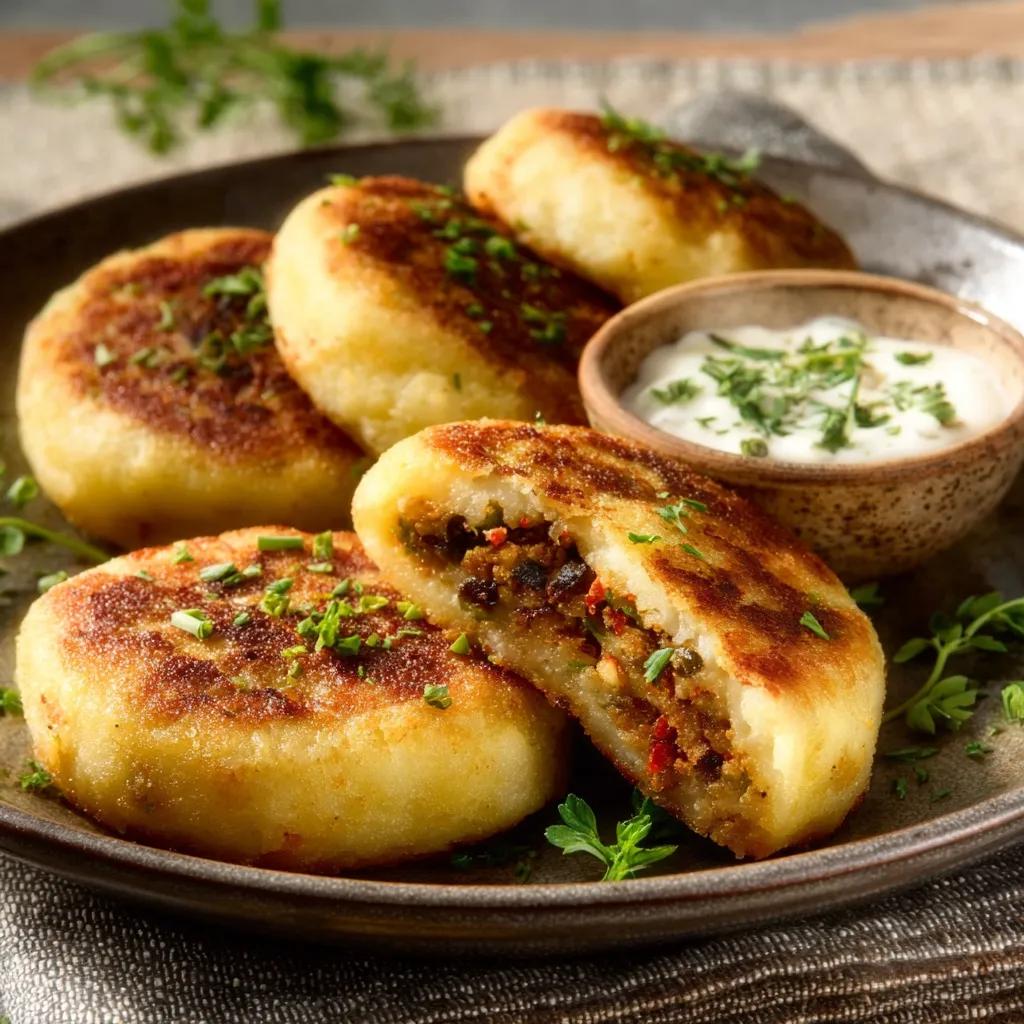

Cheesy Savory Stuffed Potato Cakes
Ingredients
Equipment
Method
- Boil the Potatoes: Place the potatoes in a large pot and cover with cold water. Bring to a boil and cook until tender, about 15-20 minutes. Drain well.
- Rice or Mash: While still hot, rice the potatoes or mash them thoroughly. Ricing will yield a smoother texture, but mashing works just fine. Be sure to eliminate lumps.
- Combine Ingredients: In a large mixing bowl, combine the mashed potatoes, egg, flour, Parmesan cheese, chives, salt, and pepper. Mix well until all ingredients are thoroughly incorporated.
- Form the Cakes: Take a generous tablespoon of the potato mixture and flatten it into a disc in the palm of your hand. Place a cube of mozzarella cheese and a cube of cheddar cheese in the center. Gently bring the edges of the potato mixture up and around the cheese, forming a ball. Flatten the ball slightly into a cake shape. Repeat with the remaining potato mixture and cheese.
- Dust with Flour: Lightly dust each potato cake with flour, ensuring that they are evenly coated. This will help them crisp up nicely in the pan.
- Fry the Cakes: Heat the vegetable oil in a large skillet over medium heat. Once the oil is hot, carefully place the potato cakes in the skillet, being careful not to overcrowd the pan.
- Cook to Golden Perfection: Cook for about 3-4 minutes per side, or until golden brown and crispy. The cheese should be melted and gooey inside.
- Serve Immediately: Remove the potato cakes from the skillet and place them on a paper towel-lined plate to drain any excess oil. Serve immediately with sour cream or your favorite dipping sauce.