The Alchemy of Potato Puffs: Decoding the Science
The secret to perfect mashed potato cheese puffs lies in understanding the science of starch, fat, and moisture. Potatoes are primarily composed of starch. When cooked, these starch granules absorb water and swell, creating that soft, fluffy texture we associate with mashed potatoes. However, too much moisture and not enough binding agents will lead to a soggy, collapsing puff. Fat contributes to the richness and tenderness of the puff, while cheese adds flavor and structure, especially when it melts and then sets again as it cools. The key is striking the perfect balance between these elements to achieve a stable, crispy exterior and a creamy, flavorful interior. We’re aiming for a textural symphony that elevates these potato snacks beyond their simple ingredients. This recipe is a fantastic way to use leftover mashed potatoes and elevate them into irresistible cheesy appetizers.The Ultimate Mashed Potato Cheese Puffs Recipe

Ingredients:
- 4 cups cold mashed potatoes (preferably made with russet potatoes)
- 1 cup shredded cheddar cheese (sharp cheddar provides the best flavor)
- 1/2 cup grated Parmesan cheese
- 1/4 cup all-purpose flour
- 2 large eggs, lightly beaten
- 1/4 cup chopped fresh chives or green onions (optional)
- 1 teaspoon garlic powder
- 1/2 teaspoon salt
- 1/4 teaspoon black pepper
- Vegetable oil, for frying (or cooking spray for baking)
Equipment:
- Large mixing bowl
- Measuring cups and spoons
- Baking sheet (for baking) or deep fryer (for frying)
- Parchment paper (optional, for baking)
- Ice cream scoop or spoon (for shaping)
Instructions:
- Prepare the Potato Mixture: In a large mixing bowl, combine the cold mashed potatoes, cheddar cheese, Parmesan cheese, flour, eggs, chives (if using), garlic powder, salt, and pepper. Mix well until all ingredients are thoroughly incorporated. The mixture should be thick and slightly sticky.
- Chill the Mixture: Cover the bowl with plastic wrap and refrigerate for at least 30 minutes, or up to 2 hours. This chilling time is crucial as it allows the mixture to firm up, making it easier to handle and preventing the puffs from spreading too much during cooking.
- Shape the Puffs: Remove the potato mixture from the refrigerator. Using an ice cream scoop or a spoon, scoop out portions of the mixture and gently roll them into 1-inch balls. Place the balls on a baking sheet lined with parchment paper (if baking) or a plate (if frying).
- Choose Your Cooking Method: Frying: Heat about 2 inches of vegetable oil in a deep fryer or large pot to 350°F (175°C). Carefully drop the potato puffs into the hot oil, a few at a time, ensuring not to overcrowd the fryer. Fry for 2-3 minutes, or until golden brown and crispy, flipping occasionally for even cooking. Remove the puffs with a slotted spoon and place them on a paper towel-lined plate to drain excess oil. Baking: Preheat your oven to 400°F (200°C). Place the shaped potato puffs on a baking sheet lined with parchment paper. Lightly spray the puffs with cooking spray. Bake for 20-25 minutes, or until golden brown and slightly crispy, flipping halfway through for even browning.
- Serve: Serve the mashed potato cheese puffs immediately while they are still hot and crispy. They can be enjoyed plain or with your favorite dipping sauce, such as ranch dressing, ketchup, or a spicy aioli. These finger food delights are perfect for parties, appetizers, or a satisfying snack.
My Deep Dive into Potato Puff Perfection
The Initial Stumbles: Soggy Beginnings
My first few attempts were a disaster. Like many of you, I initially thought that simply combining mashed potatoes and cheese would result in perfectly formed, crispy puffs. I was wrong. Terribly wrong. The puffs spread into flat, greasy discs that lacked any structural integrity. The texture was uniformly soft and mushy, far from the desired crispy-creamy contrast. The flavor, while palatable, was underwhelming. I felt like I was eating savory potato pancakes, not the elegant potato snacks I envisioned.The Flour Factor: A Step in the Right Direction
Then, I had an “Aha!” moment. I realized that I needed a binding agent to absorb excess moisture and provide structure. Flour seemed like the logical choice. I experimented with different amounts of flour, starting with a small quantity and gradually increasing it until I achieved a consistency that felt manageable. This definitely improved the shape and texture, but the puffs were still a bit dense and heavy. I needed something more.The Egg Equation: Adding Lightness and Binding
Next, I considered the role of eggs. Eggs are fantastic binders and also contribute to a lighter texture. I added eggs to the flour-potato mixture and immediately noticed a difference. The batter became more cohesive and airy. The resulting puffs were less dense and had a slightly crispier exterior. However, they still weren’t quite perfect. They tended to deflate slightly as they cooled.Cheese, Glorious Cheese: The Flavor and Structure Savior
The final piece of the puzzle was the cheese. While I had initially focused on cheddar, I realized that a combination of cheddar and Parmesan cheese offered a better balance of flavor and structure. The cheddar provided a rich, melty base, while the Parmesan added a salty, nutty note and helped to create a crispier crust. I also discovered that using cold mashed potatoes was critical. Warm mashed potatoes have more moisture, which can lead to a soggy puff. Finally, chilling the mixture before shaping and frying allowed the puffs to hold their shape better and develop a more even crust. This recipe is also a great alternative to traditional mashed potatoes, like Meatloaf Mashed Potatoeseer.Crafting the Ideal Potato Puff: The Foolproof Technique
After numerous trials and tribulations, I finally cracked the code. Here’s the technique that guarantees perfect mashed potato cheese puffs every time:- Start with Cold Mashed Potatoes: Leftover mashed potatoes work best. Ensure they are thoroughly chilled.
- Balance the Ingredients: Use the precise ratios of mashed potatoes, cheese, flour, and eggs outlined in the recipe.
- Don’t Skimp on the Cheese: A combination of cheddar and Parmesan provides the best flavor and texture.
- Chill Before Shaping: Refrigerate the mixture for at least 30 minutes to firm it up.
- Control the Cooking Temperature: Maintain a consistent oil temperature of 350°F (175°C) for frying, or a consistent oven temperature of 400°F (200°C) for baking.
- Don’t Overcrowd: Fry or bake the puffs in small batches to ensure even cooking and prevent the oil temperature from dropping too much.
- Serve Immediately: Mashed potato cheese puffs are best enjoyed hot and crispy.
What is the key to making mashed potato cheese puffs that aren’t soggy and hold their shape?
The key is balancing starch, fat, and moisture. Use cold mashed potatoes, a binding agent like flour, eggs, and a good cheese blend (cheddar and Parmesan) to create a stable, crispy exterior and creamy interior. Chilling the mixture before cooking is also crucial.
Why is it important to chill the mashed potato mixture before shaping and cooking the puffs?
Chilling the mixture allows it to firm up, making it easier to handle and preventing the puffs from spreading too much during cooking. This helps them hold their shape better and develop a more even crust.
What is the best way to cook the mashed potato cheese puffs, frying or baking?
The recipe provides instructions for both frying and baking. Frying involves deep-frying in vegetable oil until golden brown and crispy, while baking involves preheating the oven, spraying the puffs with cooking spray, and baking until golden brown and slightly crispy, flipping halfway through.
What kind of mashed potatoes work best for this recipe?
Cold, leftover mashed potatoes, preferably made with russet potatoes, work best. Warm mashed potatoes have more moisture which can lead to a soggy puff.
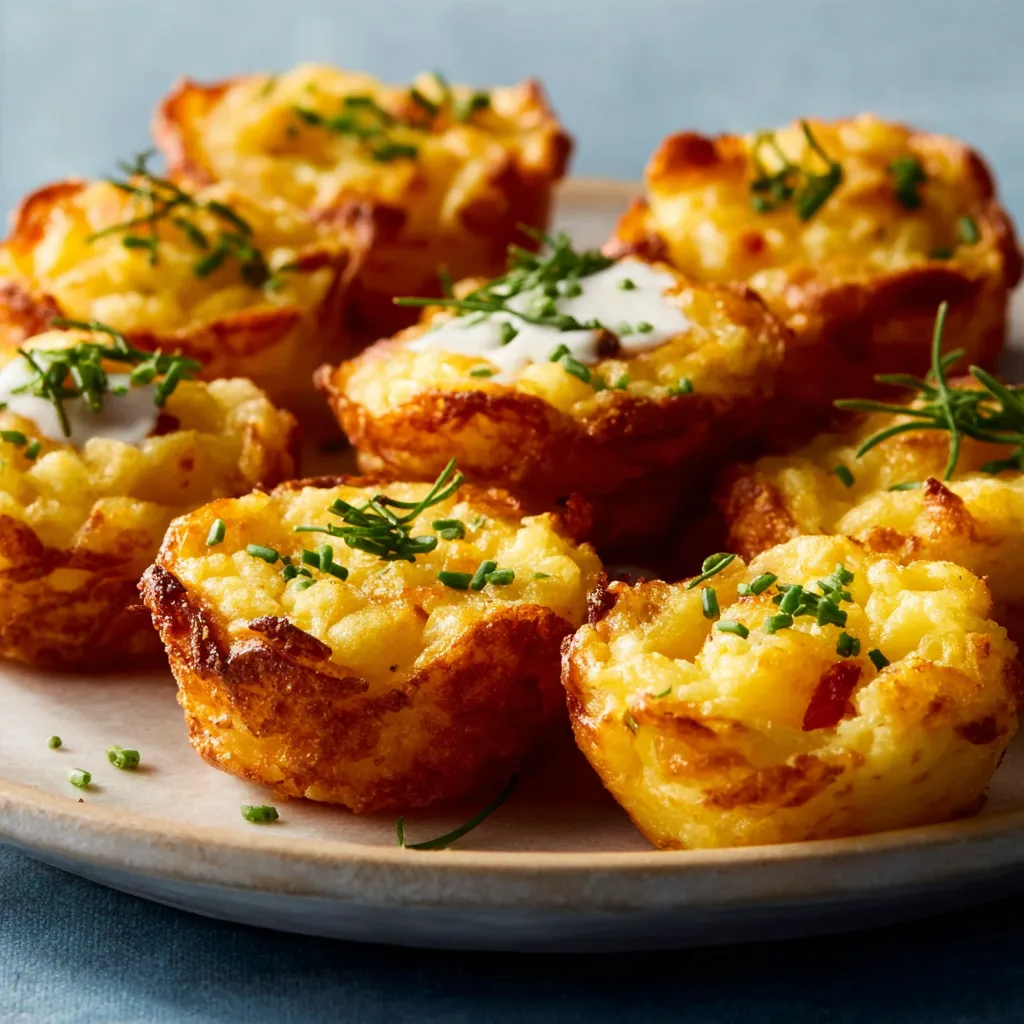

Perfect Mashed Potato Cheese Puffs
Ingredients
Equipment
Method
- Prepare the Potato Mixture: In a large mixing bowl, combine the cold mashed potatoes, cheddar cheese, Parmesan cheese, flour, eggs, chives (if using), garlic powder, salt, and pepper. Mix well until all ingredients are thoroughly incorporated. The mixture should be thick and slightly sticky.
- Chill the Mixture: Cover the bowl with plastic wrap and refrigerate for at least 30 minutes, or up to 2 hours. This chilling time is crucial as it allows the mixture to firm up, making it easier to handle and preventing the puffs from spreading too much during cooking.
- Shape the Puffs: Remove the potato mixture from the refrigerator. Using an ice cream scoop or a spoon, scoop out portions of the mixture and gently roll them into 1-inch balls. Place the balls on a baking sheet lined with parchment paper (if baking) or a plate (if frying).
- Choose Your Cooking Method: Frying: Heat about 2 inches of vegetable oil in a deep fryer or large pot to 350°F (175°C). Carefully drop the potato puffs into the hot oil, a few at a time, ensuring not to overcrowd the fryer. Fry for 2-3 minutes, or until golden brown and crispy, flipping occasionally for even cooking. Remove the puffs with a slotted spoon and place them on a paper towel-lined plate to drain excess oil.
- Baking: Preheat your oven to 400°F (200°C). Place the shaped potato puffs on a baking sheet lined with parchment paper. Lightly spray the puffs with cooking spray. Bake for 20-25 minutes, or until golden brown and slightly crispy, flipping halfway through for even browning.
- Serve: Serve the mashed potato cheese puffs immediately while they are still hot and crispy. They can be enjoyed plain or with your favorite dipping sauce, such as ranch dressing, ketchup, or a spicy aioli.