
Unlocking the Alchemy: The Science Behind Bean Soup Bliss
The magic of Tuscan white bean soup lies in understanding a few key scientific principles. First, beans themselves are powerhouses of flavor precursors. These compounds, largely amino acids and sugars, undergo Maillard reactions and caramelization when heated, creating complex and savory notes. Secondly, the aromatics (onion, garlic, herbs) contribute volatile organic compounds that dissolve in the soup, enhancing its fragrance and taste. Thirdly, the olive oil, more than just a fat, acts as a flavor carrier, helping distribute these aromas and creating a luscious mouthfeel. Finally, and perhaps most importantly, is time. Slow simmering allows these flavors to meld and deepen, transforming humble ingredients into something extraordinary. Many times I find that the flavor of beans can be amplified in a dish like Pasta Fagioli as well.The Ultimate Tuscan White Bean Soup Recipe
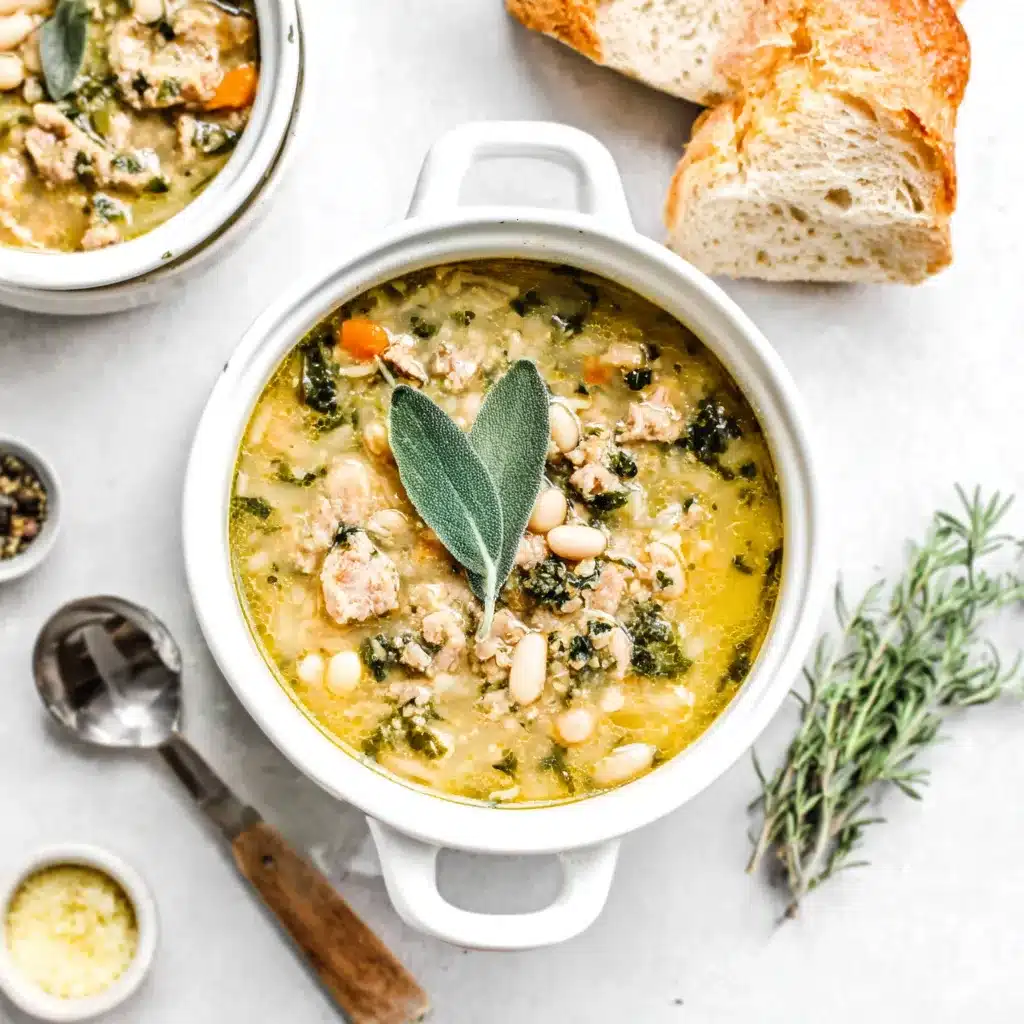
Ingredients:
- 1 pound dried cannellini beans, soaked overnight and drained
- 8 cups vegetable broth (or chicken broth for a richer flavor)
- 1/4 cup extra virgin olive oil
- 1 large yellow onion, finely chopped
- 4 cloves garlic, minced
- 2 carrots, finely chopped
- 2 celery stalks, finely chopped
- 1 teaspoon dried rosemary
- 1/2 teaspoon dried sage
- 1/4 teaspoon red pepper flakes (optional)
- 1 bay leaf
- Salt and freshly ground black pepper to taste
- Juice of 1/2 lemon
- Fresh parsley, chopped, for garnish
- Crusty bread, for serving
Instructions:
- Sauté the Aromatics: In a large pot or Dutch oven, heat the olive oil over medium heat. Add the onion, carrots, and celery and cook until softened, about 8-10 minutes. Add the garlic, rosemary, sage, and red pepper flakes (if using) and cook for another minute until fragrant.
- Combine Ingredients: Add the drained cannellini beans, vegetable broth, and bay leaf to the pot. Bring to a boil, then reduce heat to low, cover, and simmer for at least 1 1/2 hours, or until the beans are very tender. Check occasionally to ensure there is enough liquid and add more broth if needed.
- Puree for Texture: Remove about 2 cups of the soup and blend it using an immersion blender or a regular blender (be careful when blending hot liquids!). Return the pureed soup to the pot. This step creates a creamy texture without adding any cream. I find that this technique works well in my Minestrone Soup as well.
- Season and Finish: Season the soup with salt and pepper to taste. Remove the bay leaf. Stir in the lemon juice.
- Serve: Ladle the soup into bowls, garnish with fresh parsley, and serve with crusty bread for dipping. A drizzle of extra virgin olive oil on top is also a nice touch.
My Bean Soup Journey: A Culinary Confession
My quest to create the perfect Tuscan white bean soup was not without its pitfalls. My first few attempts were a disaster – watery, flavorless, and generally unappetizing. Like many of you, I initially thought that simply throwing everything into a pot and simmering it would suffice. I was wrong.The Bean Soaking Blunder
Initially, I skipped the bean soaking step, figuring it was just an unnecessary hassle. Big mistake! The beans took forever to cook, and even then, they were often uneven in texture – some mushy, others still firm. Soaking not only shortens the cooking time but also helps to remove some of the indigestible sugars that can cause, shall we say, *unpleasant* side effects. I have found that soaking is not as important in a dish like Lasagna Soup.The Aromatic Awakening
Another early mistake was skimping on the aromatics. I used just a small onion and a clove or two of garlic, thinking that the beans would provide the bulk of the flavor. It wasn’t enough. The soup lacked depth and complexity. Then, I had an “Aha!” moment when I realized the importance of building a flavorful base with plenty of onion, garlic, carrots, and celery.The Puree Power-Up
The biggest breakthrough came when I decided to puree a portion of the soup. Previously, the soup was thin and watery. Pureeing some of the beans created a creamy, luxurious texture without the need for any added cream or thickeners. This trick transformed the soup from something ordinary to something truly special. This is a great tip to use if you are looking to thicken up a Cozy Chicken Soup.The Herb Revelation
Finally, I experimented with different herbs and spices. While some recipes call for just rosemary, I found that a combination of rosemary and sage provided the perfect balance of earthy and savory flavors. A pinch of red pepper flakes added a subtle kick, while the bay leaf contributed a subtle depth.The Foolproof Formula: A Step-by-Step Success Plan
After countless trials and errors, I’ve distilled the process into a simple, foolproof method:- Soak the beans: Always soak your beans overnight (or for at least 8 hours) before cooking. This ensures even cooking and reduces cooking time.
- Build a Flavorful Base: Don’t skimp on the aromatics. Sauté plenty of onion, garlic, carrots, and celery in olive oil until softened.
- Slow and Steady Wins the Race: Simmer the soup gently over low heat for at least 1 1/2 hours, or until the beans are very tender. Patience is key.
- Puree for Perfection: Puree a portion of the soup to create a creamy texture without adding any cream.
- Season with Love: Season the soup generously with salt, pepper, and other herbs and spices to taste. Don’t be afraid to experiment and find your perfect flavor combination. Sometimes I add a splash of lemon juice to create a little brightness.
- Don’t forget the crusty bread: All soups taste better with some bread to soak up the goodness. I find this especially true with Italian Penicillin Soup.
Why is it important to soak the cannellini beans overnight before making the soup?
Soaking the beans overnight ensures even cooking, reduces cooking time, and helps remove indigestible sugars that can cause digestive issues.
What is the purpose of pureeing a portion of the soup?
Pureeing about 2 cups of the soup creates a creamy, luxurious texture without the need for added cream or thickeners.
What are the key aromatic vegetables used in the Tuscan white bean soup, and why are they important?
The key aromatic vegetables are onion, garlic, carrots, and celery. They are important because they build a flavorful base for the soup, adding depth and complexity to the overall taste.
What herbs are recommended for flavoring the soup?
The recipe recommends a combination of rosemary and sage for an earthy and savory flavor balance. Red pepper flakes and a bay leaf can also be added for a subtle kick and depth.


Tuscan White Bean Soup
This Tuscan white bean soup recipe combines simple ingredients to create a deeply flavorful and satisfying meal. The key is to build a flavorful base, simmer slowly, and puree a portion of the soup for a creamy texture.
Ingredients
Equipment
Method
- Sauté the Aromatics: In a large pot or Dutch oven, heat the olive oil over medium heat. Add the onion, carrots, and celery and cook until softened, about 8-10 minutes. Add the garlic, rosemary, sage, and red pepper flakes (if using) and cook for another minute until fragrant.
- Combine Ingredients: Add the drained cannellini beans, vegetable broth, and bay leaf to the pot. Bring to a boil, then reduce heat to low, cover, and simmer for at least 1 1/2 hours, or until the beans are very tender. Check occasionally to ensure there is enough liquid and add more broth if needed.
- Puree for Texture: Remove about 2 cups of the soup and blend it using an immersion blender or a regular blender (be careful when blending hot liquids!). Return the pureed soup to the pot.
- Season and Finish: Season the soup with salt and pepper to taste. Remove the bay leaf. Stir in the lemon juice.
- Serve: Ladle the soup into bowls, garnish with fresh parsley, and serve with crusty bread for dipping. A drizzle of extra virgin olive oil on top is also a nice touch.
Notes
Soaking the beans overnight is crucial for even cooking and reducing cooking time. Don’t skimp on the aromatics to build a flavorful base. You can use chicken broth for a richer flavor. For a thicker soup, puree more of the beans. Store leftovers in an airtight container in the refrigerator for up to 3 days.