Deciphering Deliciousness: The Science Behind the Roast
Beef tenderloin, also known as filet mignon when cut into steaks, is prized for its tenderness. This comes down to muscle structure: it’s a muscle that doesn’t do a lot of work, resulting in fewer connective tissues. When heat is applied, muscle fibers contract and toughen, while collagen (a key connective tissue) begins to break down into gelatin, making the meat more tender. However, overcooking continues to toughen the muscle fibers, negating the benefit of the collagen breakdown. The trick, therefore, is to cook it *just* right. Here’s the crucial science:- Maillard Reaction: This chemical reaction between amino acids and reducing sugars gives browned food its distinctive flavor. A hot oven and dry surface are essential for maximizing this reaction.
- Carryover Cooking: The internal temperature of the roast will continue to rise even after it’s removed from the oven. This “carryover” can be significant (5-10°F), so it’s vital to pull the roast *before* it reaches the target temperature.
- Resting Period: Allowing the roast to rest after cooking is non-negotiable. During this time, muscle fibers relax, and juices redistribute throughout the meat, resulting in a more tender and flavorful result. Cut into it too soon, and those juices will spill out onto the cutting board, leaving you with a drier roast.
The Holy Grail: Perfect Beef Tenderloin Roast Recipe

Ingredients:
- 1 (3-4 pound) beef tenderloin roast, trimmed
- 2 tablespoons olive oil
- 2 tablespoons kosher salt
- 1 tablespoon black pepper, freshly ground
- 1 tablespoon garlic powder
- 1 tablespoon dried rosemary
- 1 teaspoon dried thyme
Equipment:
- Oven
- Roasting Pan
- Meat Thermometer (crucial!)
- Kitchen Twine (optional, for trussing)
Instructions:
- Prepare the Roast: Pat the beef tenderloin dry with paper towels. This is essential for a good sear. If necessary, use kitchen twine to tie the roast in 2-inch intervals to create a more uniform shape for even cooking.
- Season Generously: In a small bowl, combine the salt, pepper, garlic powder, rosemary, and thyme. Rub the mixture all over the beef tenderloin, ensuring it’s evenly coated.
- Sear the Roast: Preheat your oven to 450°F (232°C). Heat the olive oil in a large, oven-safe skillet or roasting pan over medium-high heat. Once the oil is shimmering, sear the beef tenderloin on all sides until nicely browned, about 2-3 minutes per side. This step is critical for developing flavor and a beautiful crust.
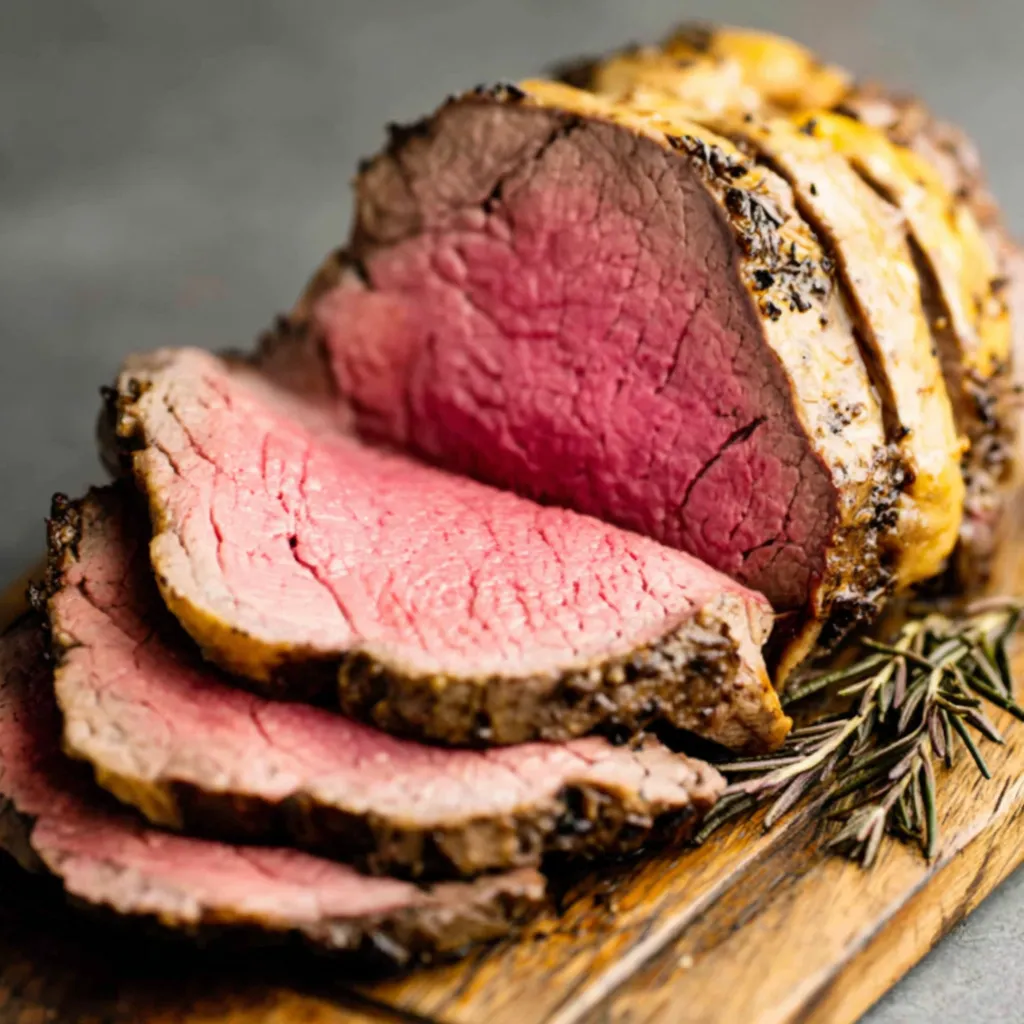
- Roast to Perfection: Transfer the skillet or roasting pan to the preheated oven. Reduce the oven temperature to 325°F (163°C). Roast until the internal temperature reaches 125°F (52°C) for rare, 130°F (54°C) for medium-rare, or 135°F (57°C) for medium. Use a meat thermometer inserted into the thickest part of the roast to monitor the temperature. Cooking time will vary depending on the size of the roast, but it typically takes 15-20 minutes per pound.
- Rest and Recover: Remove the roast from the oven and transfer it to a cutting board. Tent it loosely with foil and let it rest for at least 15 minutes. This allows the juices to redistribute, resulting in a more tender and flavorful roast.
- Slice and Serve: Remove the twine (if used) and slice the beef tenderloin against the grain into 1/2-inch thick slices. Serve immediately.
Serving Suggestions:
- Serve with roasted vegetables like asparagus, Brussels sprouts, or carrots.
- A simple pan sauce made with red wine or beef broth elevates the dish.
- Mashed potatoes or creamy polenta are excellent accompaniments.
Confessions of a Culinary Investigator: My Tenderloin Trials
My journey to the perfect beef tenderloin roast was paved with learning experiences. My first few attempts were a disaster. The outside was charred, and the inside was either raw or dry and overcooked. I felt like I was missing some crucial piece of the puzzle.The Charred Crust Catastrophe
Like many of you, I initially thought high heat throughout the cooking process was the key to a flavorful crust. I cranked up the oven to 450°F (232°C) and let it rip. The result? A blackened exterior that tasted bitter and burnt, while the inside was unevenly cooked. I realized I needed a more nuanced approach.The Raw Center Revelation
Next, I tried lowering the temperature to 350°F (177°C) for the entire cooking time. This resulted in a more evenly cooked roast, but the exterior lacked that beautiful, flavorful crust I was after. The center, while not raw, was still too rare for my liking.The “Aha!” Moment: The Sear and Slow Roast
Then, I had an “Aha!” moment. I realized the secret was to *sear* the roast at high heat to develop the crust, then *reduce* the temperature to finish cooking it evenly. This two-step process allowed me to achieve the best of both worlds: a beautifully browned exterior and a perfectly cooked interior. It was like unlocking a culinary cheat code.The Thermometer Triumph
The biggest game-changer, however, was investing in a good meat thermometer. I initially relied on guesswork and cooking times, which, as I discovered, are incredibly unreliable. A meat thermometer took the guesswork out of the equation and allowed me to monitor the internal temperature of the roast with precision. I was finally able to consistently achieve the desired level of doneness. It also opened my eyes to the importance of carryover cooking. One evening while preparing Air Fryer Steak Bites, I considered what might happen if I cooked my roast the same way. After giving it some thought, I realized that it wouldn’t work, as the air fryer cooks food much too quickly and the tenderloin would not cook evenly.The Foolproof Formula: Mastering the Tenderloin Roast
After numerous experiments and taste tests, I’ve distilled the process down to a simple, foolproof method. This is how I would prepare my roast when serving it alongside Beef Stir Fry With Vegetables Recipe at a dinner party:- Dry and Season: Pat the beef tenderloin dry and season it generously with salt, pepper, garlic powder, rosemary, and thyme. A dry surface is crucial for a good sear.
- Sear it Hot: Sear the roast in a hot skillet or roasting pan over medium-high heat until nicely browned on all sides. This develops flavor and creates a beautiful crust.
- Roast Low and Slow: Reduce the oven temperature to 325°F (163°C) and roast until the internal temperature reaches your desired level of doneness (125°F for rare, 130°F for medium-rare, 135°F for medium).
- Trust the Thermometer: Use a meat thermometer to monitor the internal temperature. This is the only way to ensure accurate results.
- Rest, Rest, Rest: Remove the roast from the oven and let it rest for at least 15 minutes before slicing. This allows the juices to redistribute, resulting in a more tender and flavorful roast. Don’t skip this step!
- Slice Against the Grain: Slice the beef tenderloin against the grain for maximum tenderness.
Why is it important to let the beef tenderloin roast rest after cooking?
Resting allows the muscle fibers to relax and the juices to redistribute throughout the meat, resulting in a more tender and flavorful roast. Cutting into it too soon will cause the juices to spill out, leading to a drier roast.
What internal temperature should I aim for when roasting a beef tenderloin for medium-rare doneness?
For medium-rare, roast the beef tenderloin until the internal temperature reaches 130°F (54°C). Remember to account for carryover cooking, where the temperature will continue to rise after removing it from the oven.
Why is searing the beef tenderloin at a high temperature important before roasting?
Searing the beef tenderloin at a high temperature is critical for developing flavor and creating a beautiful, browned crust through the Maillard reaction.
What is ‘carryover cooking,’ and why should I consider it?
Carryover cooking refers to the phenomenon where the internal temperature of the roast continues to rise even after it’s removed from the oven. This can be significant (5-10°F), so you should pull the roast *before* it reaches your target temperature to avoid overcooking.

BEST BEEF TENDERLOIN ROAST
Ingredients
Equipment
Method
- Prepare the Roast: Pat the beef tenderloin dry with paper towels. If necessary, use kitchen twine to tie the roast in 2-inch intervals to create a more uniform shape for even cooking.
- Season Generously: In a small bowl, combine the salt, pepper, garlic powder, rosemary, and thyme. Rub the mixture all over the beef tenderloin, ensuring it’s evenly coated.
- Sear the Roast: Preheat your oven to 450°F (232°C). Heat the olive oil in a large, oven-safe skillet or roasting pan over medium-high heat. Once the oil is shimmering, sear the beef tenderloin on all sides until nicely browned, about 2-3 minutes per side.
- Roast to Perfection: Transfer the skillet or roasting pan to the preheated oven. Reduce the oven temperature to 325°F (163°C). Roast until the internal temperature reaches 125°F (52°C) for rare, 130°F (54°C) for medium-rare, or 135°F (57°C) for medium. Use a meat thermometer inserted into the thickest part of the roast to monitor the temperature. Cooking time will vary depending on the size of the roast, but it typically takes 15-20 minutes per pound.
- Rest and Recover: Remove the roast from the oven and transfer it to a cutting board. Tent it loosely with foil and let it rest for at least 15 minutes.
- Slice and Serve: Remove the twine (if used) and slice the beef tenderloin against the grain into 1/2-inch thick slices. Serve immediately.