
Ingredients
Equipment
Method
- Pat the chicken breasts dry with paper towels and slice horizontally if too thick.
- In a shallow dish, combine Romano cheese, flour, garlic powder, salt, and pepper.
- Dredge each chicken breast in the Romano cheese mixture, coating evenly on both sides.
- Heat olive oil and butter in a large skillet over medium-high heat.
- Add chicken breasts and cook for 5-7 minutes per side, until golden brown and cooked through (165°F/74°C).
- Remove chicken from the skillet and set aside, tenting with foil to keep warm.
- Cook pasta according to package directions in salted water, reserving 1 cup of pasta water before draining.
- In the same skillet, melt butter over medium heat.
- Add minced garlic and sauté for 1 minute, until fragrant.
- Pour in chicken broth, heavy cream (if using), lemon juice, and lemon zest.
- Bring to a simmer and cook for 2-3 minutes, until the sauce has slightly thickened.
- Add the cooked pasta to the skillet and toss to coat. Add pasta water if the sauce is too thick.
- Stir in Parmesan cheese and fresh parsley. Season with salt and pepper to taste.
- Slice the Romano chicken breasts into thin strips.
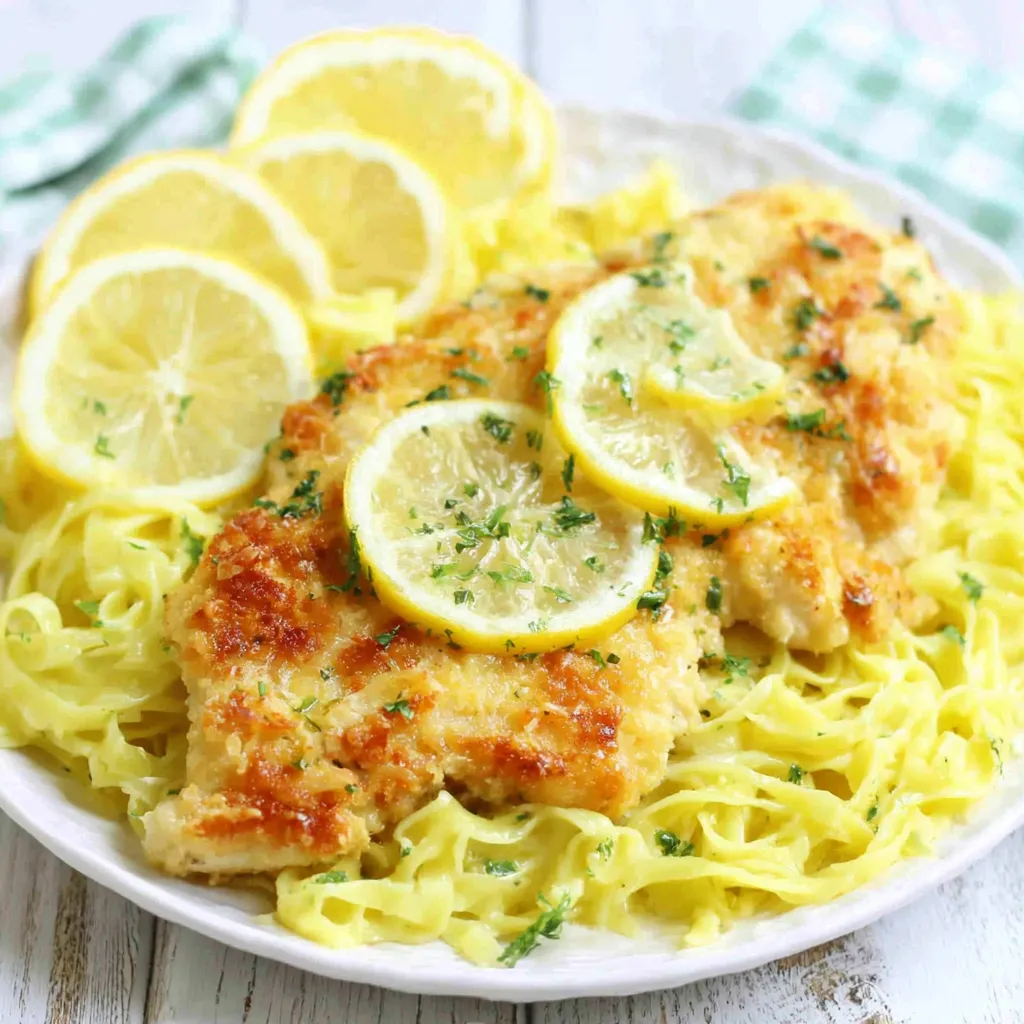
- Divide the lemon garlic pasta among plates and top with the sliced Romano chicken.
- Garnish with extra Parmesan cheese and fresh parsley, if desired.
- Serve immediately and enjoy.
Notes
Don't overcook the chicken; use a meat thermometer. Use fresh lemon juice and zest for the best flavor. Salt your pasta water generously. Reserve pasta water to adjust sauce consistency. Grate your own cheese for better melting. Adjust seasonings to taste. For variations, consider using chicken thighs, different pasta shapes, added vegetables like spinach or asparagus, red pepper flakes for heat, Pecorino Romano instead of Romano, milk or half-and-half instead of cream, or different herbs like basil or thyme. Leftovers can be stored in an airtight container in the refrigerator for up to 3 days. Reheat in the microwave or in a skillet with a splash of broth or water. The chicken is best served fresh, but can be frozen, although the texture may be affected.